

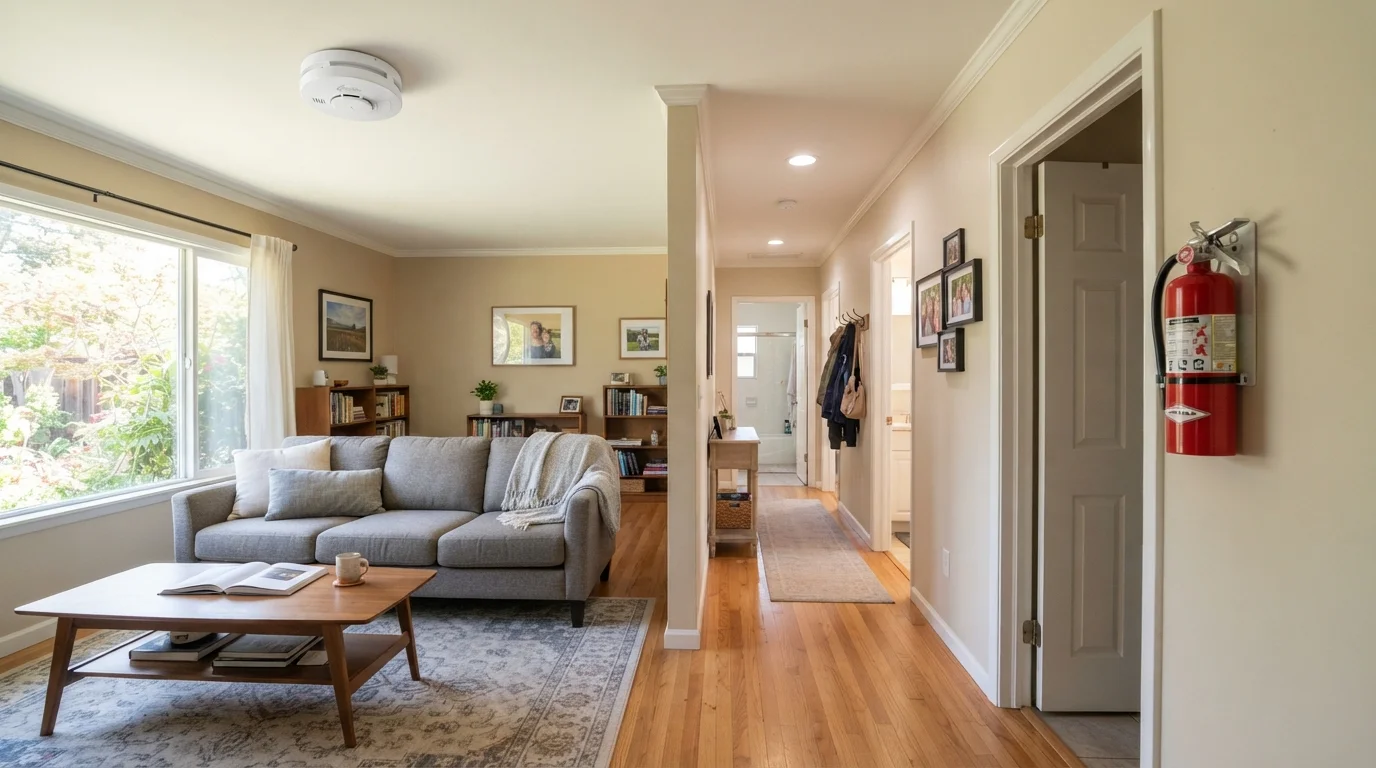
Summary
28 items · 45–90 minutes
Why a Structured Home Safety Audit Matters
Most home injuries happen in familiar places — the bathroom, the kitchen, the staircase — precisely because familiarity breeds inattention. A room-by-room audit breaks that pattern by giving you a methodical way to see your home through fresh eyes.
This checklist covers fire hazards, fall risks, electrical concerns, toxic storage, and emergency readiness. It is designed for everyday American households and takes most people between 45 and 90 minutes to complete. Work through one room at a time, note anything that needs action, and set a realistic deadline to address each item.
For a broader framework that ties safety planning together, see the complete family home safety reference. If your household includes older adults, the guide to home safety modifications for aging adults covers targeted adaptations worth reviewing alongside this checklist.
Smoke and CO detector tester
Used to press-test each detector's alert function without triggering a false alarm call.
Non-contact voltage tester
Allows you to check whether an outlet or wire is live before touching it, reducing shock risk during your electrical walkthrough.
Notepad or digital checklist app
Track which items pass, which need action, and any follow-up deadlines as you move room to room.
Flashlight
Essential for inspecting crawl spaces, under-sink cabinets, utility closets, and any poorly lit areas.
Step stool or short ladder
Needed to safely reach and test detectors, check high cabinet storage, and inspect upper wall outlets.
The Room-by-Room Checklist
Work through each group below in order, or jump to the rooms most relevant to your household. Mark items as done, needs-action, or not-applicable as you go.
Kitchen
Living Room and Common Areas
Bedrooms
Bathrooms
Garage and Utility Areas
Emergency Readiness (Whole Home)
Do Not Ignore Carbon Monoxide Sources
Carbon monoxide is produced by gas appliances, furnaces, fireplaces, and attached garages — and it cannot be seen or smelled. Every home with these sources needs at least one working CO detector installed at sleeping level. If your detector alarms, leave the building immediately and call 911 from outside; do not re-enter until cleared by emergency responders.
Electrical concerns deserve particular care. Common misunderstandings about what is and isn't safe are more widespread than most homeowners realize — the electrical safety myths article is worth reading before you assess your outlets and panels.
If your home has children of any age, note that hazards shift as kids grow. The child-proofing guide for all ages outlines age-appropriate risks families often miss.
After the Audit: Turning Findings Into Action
Once you've walked every room, sort your findings into three buckets: fix today (anything posing immediate danger), fix this week (moderate risks that need attention soon), and schedule (lower-priority improvements). Assign each item a specific date, not just an intention.
For fall-specific hazards on staircases and in hallways, the staircase and fall prevention guide provides detailed, practical remedies. And once your physical audit is done, consider pairing it with a seasonal home walkthrough checklist to catch maintenance issues before they compound into safety problems.
Repeat this audit at least once a year — or after any significant change to your household, such as a new baby, a renovation, or a family member moving in.
Schedule Professional Inspections for High-Risk Systems
A self-audit is a strong starting point, but it is not a substitute for professional assessment of electrical panels, gas lines, furnaces, and structural elements. If your walkthrough turns up anything you cannot confidently evaluate — such as flickering circuits, gas smells, or significant cracks — contact a licensed inspector or contractor before attempting any DIY repair. See the guide to judging DIY vs. professional repairs for help making that call.
This checklist is for general home safety awareness and education. It is not a substitute for inspection by a licensed professional. For electrical, structural, or code-compliance concerns, consult a qualified contractor or inspector.
The content on this site is for informational purposes only and is not a substitute for professional advice. Always consult a qualified professional for guidance specific to your situation.