

Why Home Modifications Matter for Older Adults
Falls are the leading cause of injury-related emergency room visits among adults 65 and older, according to the Centers for Disease Control and Prevention (CDC). Yet many of the conditions that contribute to falls and household injuries — slippery surfaces, poor lighting, awkward layouts — are addressable with targeted modifications. The goal isn't to transform a home into a clinical setting, but to reduce preventable hazards while preserving comfort and independence.
This reference covers the most impactful changes by area of the home. For a comprehensive room-by-room approach, see our room-by-room home safety audit.
| Leading cause of injury in adults 65+ | Falls (Centers for Disease Control and Prevention (CDC)) |
| Highest-risk room for falls | Bathroom (CDC and National Institute on Aging) |
| Grab bar anchor requirement | Must attach to wall studs or rated anchors (General building safety guidance) |
| Recommended handrail height | 34–38 inches above stair nosing (International Residential Code (IRC)) |
| Resource for local assistance | Area Agency on Aging (AAA) — Eldercare Locator (U.S. Administration on Aging) |
Key Modifications by Area of the Home
Bathroom
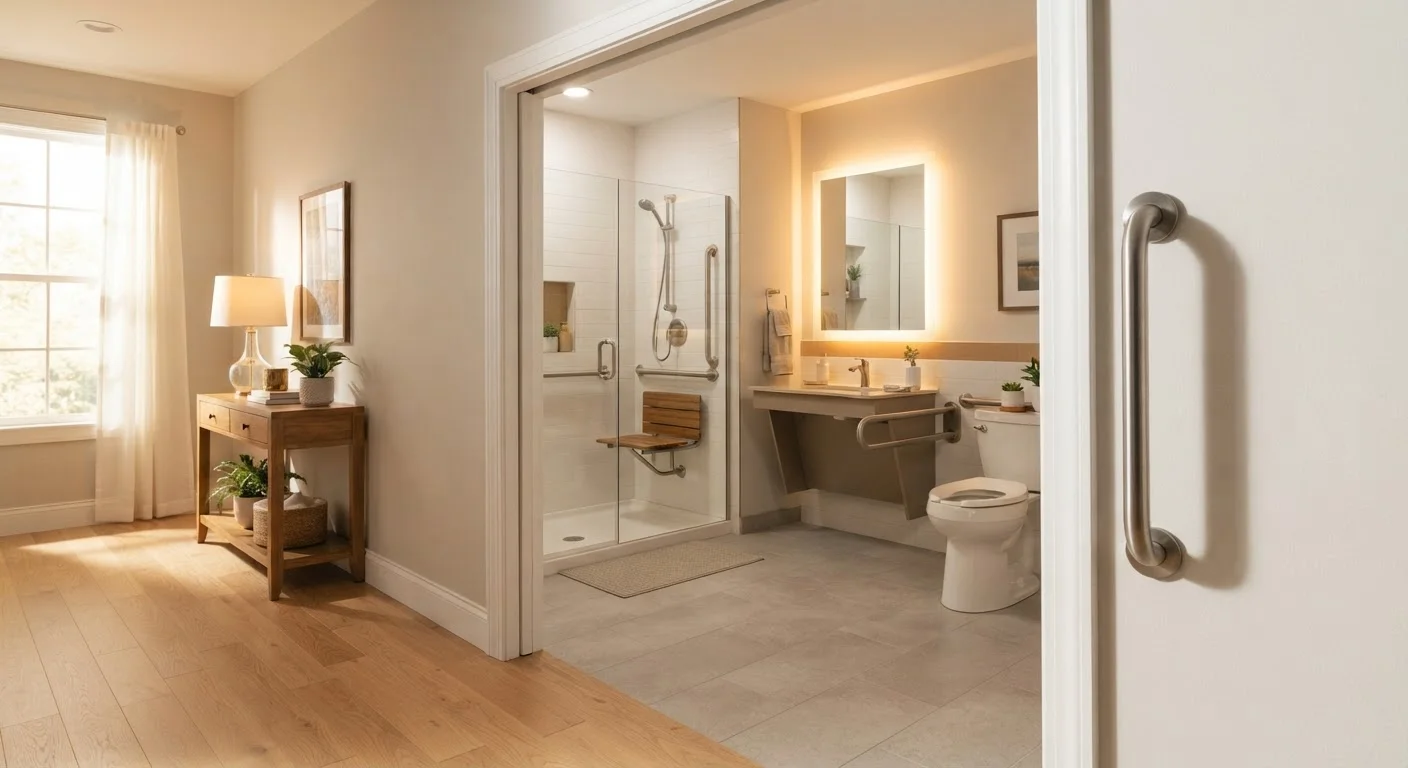
- Grab bars: Install on walls near the toilet and inside the shower or tub. Bars should be anchored to wall studs or with appropriate toggle anchors rated for body weight. Towel bars are not a substitute.
- Non-slip surfaces: Apply non-slip strips or mats inside the tub and on the bathroom floor. Look for textured flooring that remains grippy when wet.
- Walk-in or roll-in shower: Eliminating the step over a tub edge significantly reduces fall risk. A fold-down shower bench allows bathing while seated.
- Handheld showerhead: Allows bathing without repositioning or reaching overhead, reducing loss of balance.
- Raised toilet seat or comfort-height toilet: Reduces the effort required to sit and stand, lessening strain on knees and hips.
Stairways and Entryways
- Continuous handrails on both sides: Handrails should span the full length of any staircase and be graspable — round or oval profiles work best. Our staircase and fall prevention guide covers installation details.
- Adequate lighting: Illuminate every step. Motion-activated night lights are especially useful for nighttime trips.
- No-step entry: If possible, ensure at least one entrance to the home is accessible without steps. A short ramp (with a gentle slope) can be added where a step exists.
Bedroom
- Bed height: A bed that is too low or too high makes sitting and standing harder. Adjustable bed frames or risers allow customization.
- Nighttime lighting: A clear, lit path to the bathroom is critical — plug-in night lights or motion-sensor floor lights help.
- Accessible storage: Move frequently used items to shelves between hip and shoulder height to avoid overhead reaching or floor-level bending.
Kitchen and Living Areas
- Remove loose rugs: Area rugs without adequate non-slip backing are a significant trip hazard. Secure them with double-sided tape or replace them with low-pile rugs anchored by non-slip pads.
- Clear pathways: Keep main walking routes free of cords, furniture corners, and clutter.
- Lever-style door and faucet handles: Easier to operate than knobs, especially for those with reduced hand strength or arthritis.
Grab bar
A fixed bar anchored to a wall, designed to provide a stable handhold for support when standing, sitting, or transferring weight. Unlike towel bars, grab bars are installed into structural supports and are rated to bear significant body weight.
Universal design
An approach to designing spaces and products so they are usable by as many people as possible, regardless of age or ability. Homes built or modified with universal design principles tend to accommodate changing needs over time without requiring major rebuilds.
Occupational therapist (OT)
A licensed healthcare professional who helps people perform daily activities as independently as possible. OTs specializing in home assessment can identify hazards and recommend modifications tailored to a specific person's physical capabilities.
Area Agency on Aging (AAA)
A network of local and regional organizations, authorized under the federal Older Americans Act, that coordinate services for older adults including home modification assistance, transportation, and caregiver support. Find your local AAA through the Eldercare Locator.
No-step entry
A home entrance that does not require stepping up or down to cross the threshold. It is a key feature of accessible home design and can be created by adding a gradual ramp where steps currently exist.
Planning Modifications Thoughtfully
Not every modification requires a contractor, but some — particularly structural work like grab bar installation or ramp construction — benefit from professional assessment. An occupational therapist (OT) specializing in home assessment can evaluate individual needs and prioritize changes based on a person's specific abilities and layout. Many state and local programs offer home modification assistance for qualifying older adults; Area Agencies on Aging (AAA) are a good starting point for locating these resources.
Ask About Assistance Programs Before You Begin
Some state and local governments, nonprofits, and utility companies offer grants or low-cost loans specifically for home accessibility modifications. Veterans may have access to additional programs through the U.S. Department of Veterans Affairs. Contact your local Area Agency on Aging or dial 211 (a social services helpline available in most U.S. areas) to ask what is available in your community before budgeting for larger projects.
Financial planning for home modifications is a real consideration. For general information on managing household expenses, our savings and debt hub provides practical frameworks. For broader household management context, explore our home management hub.
Physical fitness also plays a role in fall prevention alongside environmental changes. Strength, balance, and flexibility work can complement home modifications meaningfully — for background, see our guide to exercise needs across decades.
This article provides general home safety information for educational purposes and is not a substitute for professional assessment. Individual needs vary; consult a qualified occupational therapist, contractor, or healthcare provider for advice tailored to your specific situation.
The content on this site is for informational purposes only and is not a substitute for professional advice. Always consult a qualified professional for guidance specific to your situation.