

What Radon Is and Where It Comes From
Radon is a radioactive gas produced by the natural decay of uranium, an element found in varying concentrations in soil, rock, and groundwater across the United States. As uranium breaks down into radium, and radium further decays, radon gas is released into the surrounding environment. Outdoors, it disperses harmlessly into the atmosphere. The problem begins when it accumulates inside enclosed spaces — particularly homes.
Because radon has no color, odor, or taste, it gives no sensory warning of its presence. A home can have dangerously elevated radon levels while appearing and smelling completely normal. This invisibility is precisely what makes it a significant household concern that often goes unaddressed for years.
Radon is present in outdoor air virtually everywhere on Earth, typically at very low concentrations (around 0.4 pCi/L on average). It's only when it becomes trapped and concentrated indoors that health risks increase substantially.
Radon Levels Vary Widely by Location
Two homes on the same street can have very different radon concentrations depending on soil composition, foundation type, and construction details. The EPA has designated radon zones across the U.S., but even homes in lower-risk zones have been found with elevated levels. Testing your specific home is the only reliable way to know your situation.
How Radon Enters Your Home
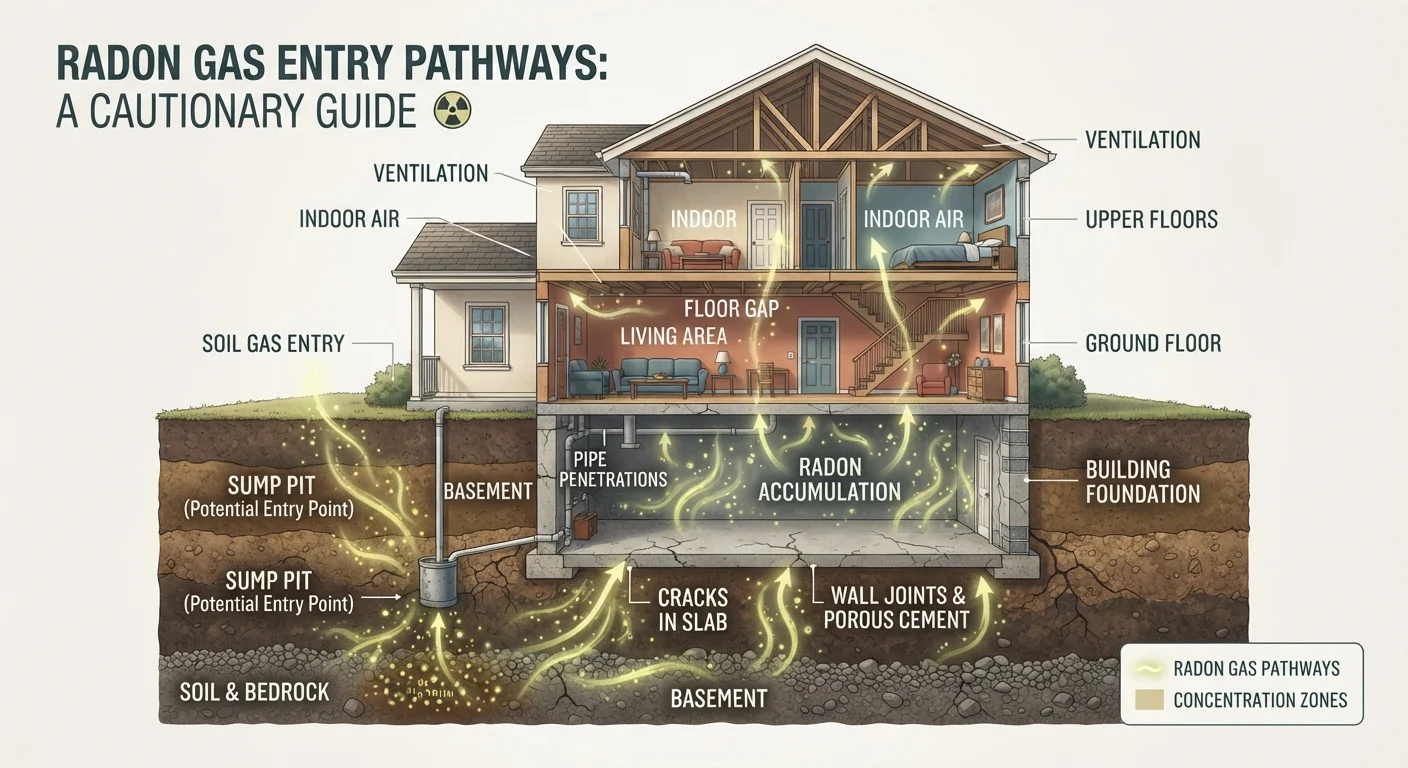
The path radon takes into a home is driven largely by pressure. Homes tend to have slightly lower air pressure than the surrounding soil, which creates a vacuum effect that draws soil gases — including radon — inward. Common entry points include:
- Cracks in concrete floors and walls
- Gaps around service pipes and utility penetrations
- Construction joints where different materials meet
- Sump pits and floor drains
- Crawl spaces with exposed soil
Basements and lower floors tend to have the highest concentrations because they are closest to the soil. However, radon can migrate upward through a home and reach significant levels on upper floors as well. Well water sourced from rock can also release radon when used indoors, though this is a less common pathway than soil entry.
For a broader look at how structural features affect home safety, see our room-by-room home safety audit, which covers a range of hazards by location.
~21,000
Estimated annual U.S. lung cancer deaths linked to radon
According to the U.S. Environmental Protection Agency, radon is the second leading cause of lung cancer in the country.
1 in 15
U.S. homes estimated to have elevated radon levels
The EPA estimates approximately one in every 15 American homes has radon levels at or above the 4 pCi/L action level.
4 pCi/L
EPA action level for indoor radon
The EPA recommends that homeowners take steps to reduce radon when indoor levels reach or exceed 4 picocuries per liter of air.
The Health Concern: Why Radon Matters
Radon itself is not directly inhaled into tissue in a harmful way — the problem is what it decays into. When radon breaks down, it produces short-lived radioactive particles called radon progeny (or decay products). These particles can attach to dust and aerosols in the air, be inhaled, and become lodged in the lungs. Over time, the radiation they emit can damage lung tissue.
The U.S. Environmental Protection Agency identifies radon as the second leading cause of lung cancer in the country, responsible for an estimated 21,000 deaths annually. The risk is significantly compounded by cigarette smoking — smokers exposed to elevated radon levels face a substantially higher risk than non-smokers at the same concentration.
“Radon is estimated to cause about 21,000 lung cancer deaths every year. Although you can't see or smell radon, it's not difficult to test for, and if high levels are found, you can take steps to fix the problem.”
— U.S. Environmental Protection Agency, Federal environmental and public health regulatory agency
This article provides general educational information about radon. It is not a substitute for guidance from a qualified health professional, certified radon specialist, or your local public health authority.
Radon risk belongs in the same conversation as other invisible indoor air threats. Our article on carbon monoxide in the home covers another colorless, odorless gas that presents serious household risks.
Testing and Reducing Radon in Your Home
Testing is the essential first step — and it's straightforward. Two main options exist for homeowners:
- Short-term tests (typically 2–7 days): Charcoal canister kits are widely available. They provide a snapshot reading and are a reasonable starting point, though results can vary with weather and seasonal changes.
- Long-term tests (90 days or more): Alpha track detectors give a more representative average over time and are generally preferred for confirming whether action is needed.
The EPA recommends testing in the lowest level of the home that is regularly used — a finished basement used as a living area, for example. If initial results are at or above 4 pCi/L, the EPA advises mitigation. Between 2 and 4 pCi/L, mitigation is worth serious consideration.
Test Before and After Major Home Changes
If you're finishing a basement, sealing foundation gaps, or making significant changes to your home's ventilation, test for radon before and after the work. Construction changes can alter how air flows through a structure, sometimes increasing or decreasing radon entry. A follow-up test confirms your home's current status.
The most common and effective mitigation approach is sub-slab depressurization: a pipe system draws radon from beneath the foundation and vents it safely outside before it can enter the living space. This method is typically installed by a certified radon mitigation contractor and can dramatically reduce indoor levels. After mitigation, follow-up testing confirms the system is working.
For homeowners thinking holistically about household air quality, our overview of indoor air quality covers the broader range of pollutants that can affect a home's environment.
This article is for general informational and educational purposes only. It is not medical advice. For concerns about radon exposure or lung health, consult a qualified healthcare professional. For radon testing and mitigation guidance, contact a certified professional or your state radon office.
Frequently Asked Questions
Radon seeps up from soil and rock beneath a home and enters through foundation cracks, gaps around service pipes, construction joints, and even well water in some cases. Air pressure differences between the inside of a home and the surrounding soil can actively draw radon inward.
The EPA recommends action when radon reaches 4 pCi/L or above, and suggests considering mitigation between 2 and 4 pCi/L. There is no level known to be completely without risk, but lower concentrations carry significantly reduced concern. Testing tells you where your home stands.
Short-term test kits (2–7 days) are available at hardware stores and online, while long-term kits (90+ days) give a more accurate seasonal average. You can also hire a certified radon measurement professional. The EPA recommends testing in the lowest livable area of your home.
Yes. Sub-slab depressurization — a system that vents radon from below the foundation to the outside — is the most common and effective method. Professional installation can reduce radon levels by up to 99%, though results vary by home construction and soil type.
Not automatically. Even newly built homes can have elevated radon levels, though some jurisdictions require radon-resistant construction features. Testing is recommended regardless of a home's age or how recently it was built.
Yes. The EPA has mapped radon zones across the country, with the highest concentrations generally found in parts of the Midwest, Appalachia, and the northern Plains. However, elevated levels have been found in every state, so location alone is not a reliable safety indicator.
The content on this site is for informational purposes only and is not a substitute for professional advice. Always consult a qualified professional for guidance specific to your situation.