

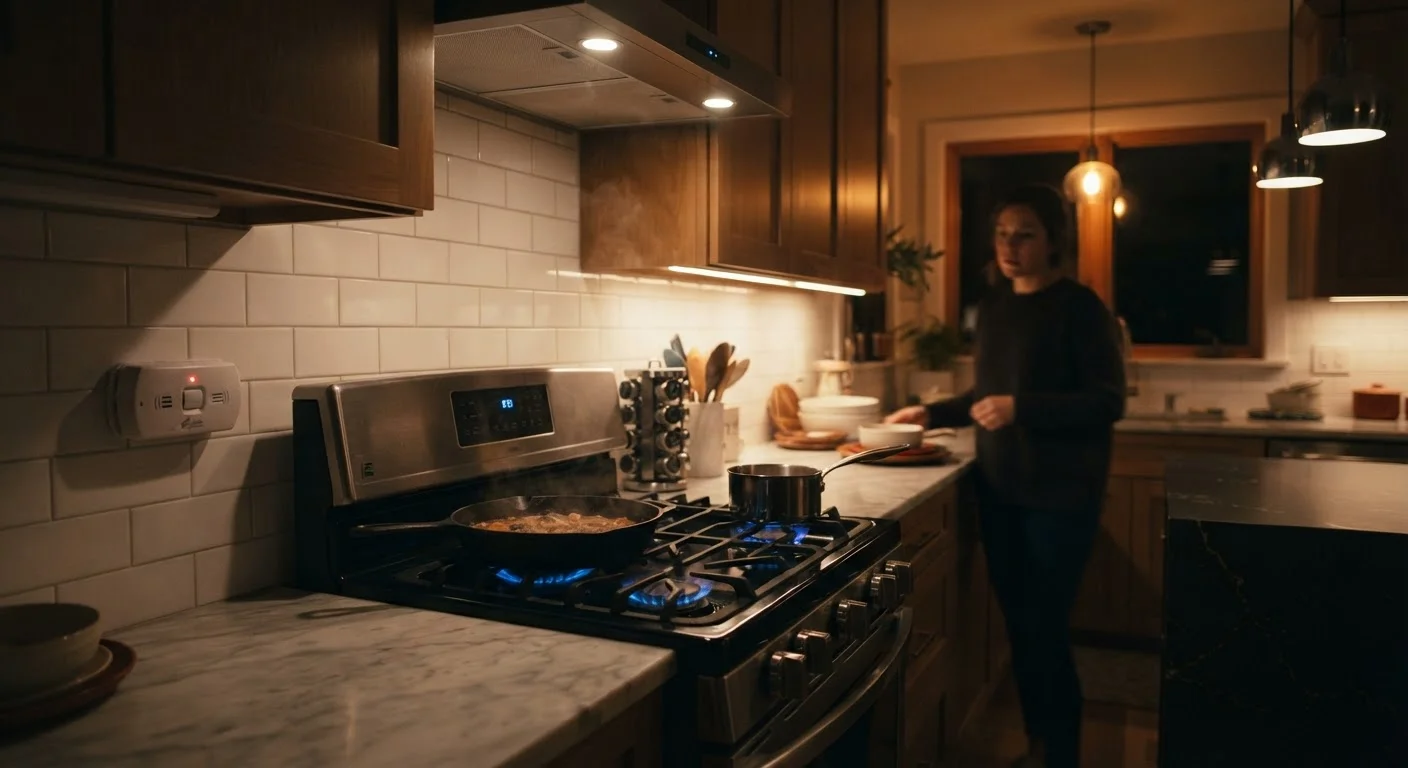
Where Carbon Monoxide Comes From
Carbon monoxide is a byproduct of incomplete combustion—what happens when fuel doesn't burn all the way. Almost any fuel-burning device in your home is a potential source if it malfunctions or is used incorrectly.
Common indoor sources include:
- Gas or oil furnaces and boilers with cracked heat exchangers or blocked flues
- Gas water heaters venting improperly
- Fireplaces and wood stoves with obstructed chimneys
- Gas ranges and ovens used for heating a room
- Portable generators operated indoors or in attached garages
- Vehicles or small engines left idling in enclosed spaces
- Charcoal grills or propane heaters brought inside
Attached garages deserve particular attention. A vehicle idling for even a few minutes can push CO levels into a dangerous range inside the living space. See our guide to garage and workshop safety for a broader look at enclosed-space hazards.
CO Is Not the Same as Carbon Dioxide
Carbon monoxide (CO) and carbon dioxide (CO₂) are different gases. CO₂ is the gas humans exhale and plants absorb; it becomes a concern only at very high concentrations in poorly ventilated spaces. CO is far more immediately toxic, binding to blood cells and blocking oxygen delivery even in small amounts. Standard CO detectors do not measure CO₂ levels.
Recognizing the Symptoms
Because CO has no sensory signals, the body's response is often the first—and sometimes only—warning. Symptoms mimic common illnesses, which is why CO poisoning is frequently misidentified.
Mild to moderate exposure
- Dull headache
- Dizziness or lightheadedness
- Nausea or vomiting
- Shortness of breath
- Confusion or difficulty concentrating
A key pattern to notice
If multiple people in the same household develop similar flu-like symptoms at the same time—but without fever—and those symptoms ease when everyone spends time outside, CO exposure is a serious possibility. The same applies to pets behaving lethargically or unusually. Seek emergency care immediately and do not return home until the source has been identified and addressed by a professional.
This article provides general safety information and is not a substitute for medical advice. If you suspect CO poisoning, call 911 immediately.
Protecting Your Home: Detectors, Maintenance, and Habits
Preventing CO buildup is straightforward when you combine reliable detection equipment with routine appliance care and safe habits.
Install and maintain CO detectors
Place a detector on every floor of the home, including the basement, and outside each sleeping area. Test each unit monthly using its test button, and replace detectors according to the manufacturer's lifespan guidance—typically every five to seven years. Because CO detection overlaps with broader indoor air safety, it's worth reviewing our article on indoor air quality for context on other airborne concerns.
Schedule annual appliance inspections
Have a licensed technician inspect your furnace, boiler, fireplace, and any other combustion appliances each year. They check for cracked heat exchangers, blockages in flues and vents, and other failure points that produce CO.
Practice safe fuel habits
- Never run generators, grills, or camp stoves inside the home, garage, or near open windows.
- Never use a gas oven or range as a space heater.
- Never leave a vehicle idling in an attached garage, even with the garage door open.
Interconnected Alarms Add a Safety Layer
Consider interconnected CO detectors—when one unit detects a problem, all alarms in the home sound simultaneously. This is especially important in larger homes or when family members sleep with doors closed, ensuring everyone hears the alert regardless of where the CO is detected.
CO detectors and smoke alarms serve different functions and should both be present in the home. Our article on smoke alarms vs. heat detectors explains how to layer your home's detection systems effectively. For a full household safety framework, see the complete family home safety reference.
CO is one of several invisible home hazards worth understanding. If you're also curious about naturally occurring gas risks, our companion article on radon as a home health hazard covers a different but equally hidden threat.
Frequently Asked Questions
You cannot detect CO by sight or smell. A working carbon monoxide detector is the only reliable way to know it is present. Symptoms in household members—headache, dizziness, or nausea that ease when everyone goes outside—can also be a clue, but an alarm is your primary warning system.
Place a detector on every level of the home, including the basement, and outside each sleeping area. Follow the manufacturer's placement instructions, as some units mount near the floor and others near the ceiling depending on their sensor type.
Open windows can help dilute CO, but they do not guarantee safety if a strong source is present. A malfunctioning furnace or a running vehicle in an attached garage can produce CO faster than natural ventilation removes it.
Evacuate everyone—including pets—immediately. Do not stop to investigate the source. Once outside, call 911. Do not re-enter the building until emergency responders have cleared it as safe.
Yes. Infants, young children, elderly individuals, pregnant people, and anyone with heart or lung conditions face greater health risk from CO exposure. These groups may experience effects at lower concentrations and more rapidly than healthy adults.
Most CO detectors have a sensor lifespan of five to seven years, though this varies by model. Check the manufacture date on the unit and replace it according to the manufacturer's guidance, even if it still appears to function normally.
The content on this site is for informational purposes only and is not a substitute for professional advice. Always consult a qualified professional for guidance specific to your situation.