

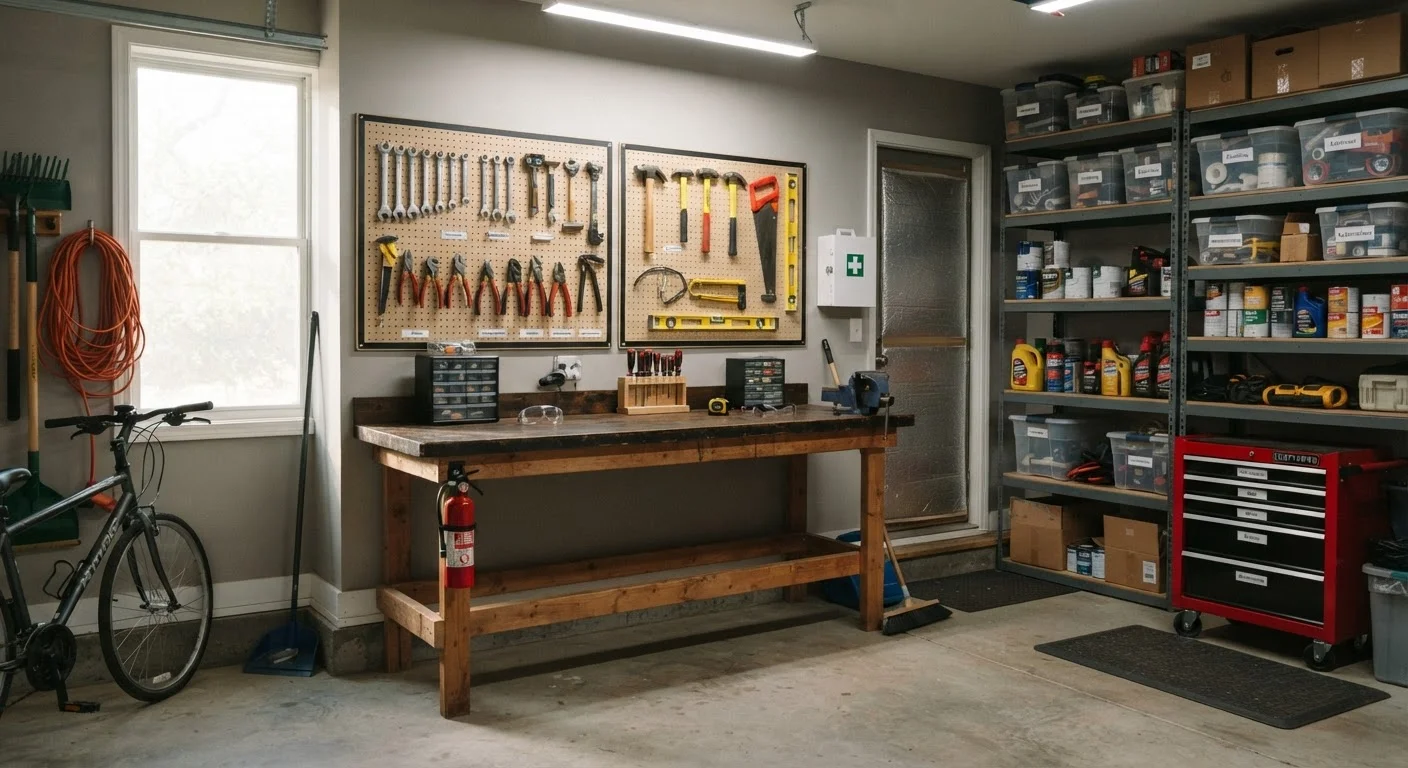
Why the Garage Deserves Serious Safety Attention
Most home safety planning focuses on kitchens, bathrooms, and staircases — rooms where people spend the most time. The garage, by contrast, tends to get overlooked. Yet it routinely concentrates flammable fuels, power tools, toxic chemicals, and vehicle exhaust in a space that may lack adequate ventilation, childproof storage, or proper electrical protection.
According to the U.S. Consumer Product Safety Commission, garages and workshops are consistent sources of home injuries, fires, and poisonings. Many of those incidents are preventable with straightforward adjustments to how the space is organized and maintained. The hazards below are among the most commonly missed — and the most consequential when ignored. For a broader review of your home's risk profile, see our room-by-room home safety audit.
Gasoline and Fuel Storage
Gasoline is one of the most hazardous materials in the average home, yet it's routinely stored in old, unmarked, or damaged containers. Fuel vapors are heavier than air, meaning they collect at floor level and can travel to distant ignition sources — a water heater pilot light, a refrigerator compressor, even a light switch — before igniting.
- Use only containers approved by a recognized standards body (look for labels indicating compliance with ASTM F3326 or similar standards).
- Store fuel in a detached structure or a dedicated, ventilated cabinet away from appliances with open flames or electrical components.
- Keep quantities to a minimum. Fuel degrades over time and old gasoline can damage small engines.
- Never store fuel near exits you'd use during a fire emergency.
Gasoline vapors travel at floor level and can ignite far from where the fuel is stored.
Carbon Monoxide from Vehicles and Equipment
Running a vehicle, lawnmower, generator, or gas-powered tool in a closed or partially closed garage can produce lethal concentrations of carbon monoxide (CO) within minutes. CO is colorless and odorless, so there's no sensory warning before symptoms — headache, dizziness, confusion — begin.
- Always open the garage door fully before starting any engine, and keep it open until the vehicle or equipment has been moved outside.
- Never run a portable generator inside a garage, even with the door open. Generators should be operated well away from any structure.
- Install a combination smoke and carbon monoxide detector near the door connecting your garage to your home's interior.
For a deeper look at CO risks throughout the home, see what every family should understand about carbon monoxide.
Carbon monoxide can reach dangerous levels in a closed garage within just a few minutes.
Chemical Storage and Incompatibility
Garages often accumulate years' worth of pesticides, solvents, pool chemicals, fertilizers, automotive fluids, and cleaning products — sometimes stored side by side. Certain combinations can react to produce toxic gases, corrosive compounds, or even fires without any external ignition.
- Store chemicals in their original, labeled containers. Transferring liquids to unlabeled containers is a leading cause of accidental poisoning and improper disposal.
- Keep oxidizing agents (like pool chlorine) physically separated from flammables, acids, and organic materials.
- Dispose of old or unknown chemicals through your local household hazardous waste program rather than pouring them down drains or into trash.
Our guide on safe household chemical storage covers incompatibility risks that most product labels don't spell out.
Storing incompatible chemicals near each other can trigger dangerous reactions with no visible warning.
Power Tools and Unsecured Equipment
Power tools cause thousands of emergency room visits annually in the United States. Many of those incidents involve untrained users, missing guards, or tools left accessible to children. A wall-mounted pegboard may look organized, but it leaves tools within reach of anyone who walks into the space.
- Lock power tools in a cabinet or secure them behind a locked door when not in use, especially in households with children or teens.
- Inspect cords and housings regularly. Frayed cords, cracked guards, and missing blade shields should be addressed before the tool is used again.
- Never disable safety guards. They are designed around the most common failure modes for each tool type.
- Keep a first-aid kit in the garage and know where it is before you need it.
A locked cabinet is one of the simplest and most effective ways to prevent tool-related injuries.
Electrical Hazards and Extension Cord Misuse
Garage electrical systems are frequently overloaded, especially as the space accumulates power tools, refrigerators, chargers, and lighting. Extension cords — designed for temporary use — often become permanent fixtures, which increases fire and shock risk considerably.
- Ensure garage circuits are protected by ground fault circuit interrupter (GFCI) outlets, particularly near water sources like utility sinks or floor drains. Most modern building codes require this; older garages may not have it.
- Do not daisy-chain extension cords or use them as substitutes for permanent wiring. If you consistently need more outlets, consult a licensed electrician.
- Store cords loosely coiled, not tightly wrapped, which can damage internal wiring over time.
- Check that any overhead lighting or wiring hasn't been disturbed by shelf installation, overhead storage, or prior DIY work.
Extension cords used as permanent wiring are a leading cause of garage electrical fires.
Inadequate Ventilation
Many garages have limited airflow by design. That's manageable for vehicle storage, but becomes a meaningful health concern when the space is used for painting, staining, solvent-based cleaning, or running combustion equipment. Fumes from finishes and adhesives can reach harmful concentrations quickly in enclosed spaces.
- Open doors and windows before using any solvent, paint, or adhesive. Cross-ventilation — air moving in from one side and out another — is more effective than a single open door.
- For sustained workshop use, consider a dedicated exhaust fan rated for hazardous locations if your work regularly involves flammable vapors.
- Wear appropriate respiratory protection as specified on product labels. A basic dust mask does not filter chemical vapors.
Garage air quality connects directly to the air circulating in your home if there's an attached interior door. Our article on indoor air quality factors most Americans underestimate explains how garage conditions can affect the broader household environment.
Cross-ventilation — not just an open door — is the minimum standard when working with solvents or paints.
Building Safer Habits in Your Garage Year-Round
Garage safety isn't a one-time project — it's an ongoing practice. Seasonal changes bring new risks: lawnmowers come out in spring, space heaters move in during winter, and holiday storage shifts what's accessible to children. Revisit your garage setup at least twice a year with fresh eyes.
Schedule a Twice-Yearly Garage Safety Check
Treat your garage like any other maintained system in your home. Each spring and fall, walk through with a checklist: inspect chemical containers for leaks or damage, test your CO detector, check that tool locks are functional, and look for any new extension cord or electrical shortcuts that crept in. Pairing this with your smoke alarm battery check makes it easier to remember.
If your household includes children or aging adults, the stakes are higher. Our guides on child-proofing beyond the nursery and home safety modifications for aging adults outline age-specific vulnerabilities worth addressing. Before taking on any garage repair or modification yourself, understand which DIY jobs are actually safe to tackle — some are better left to qualified professionals.
The content on this site is for informational purposes only and is not a substitute for professional advice. Always consult a qualified professional for guidance specific to your situation.