

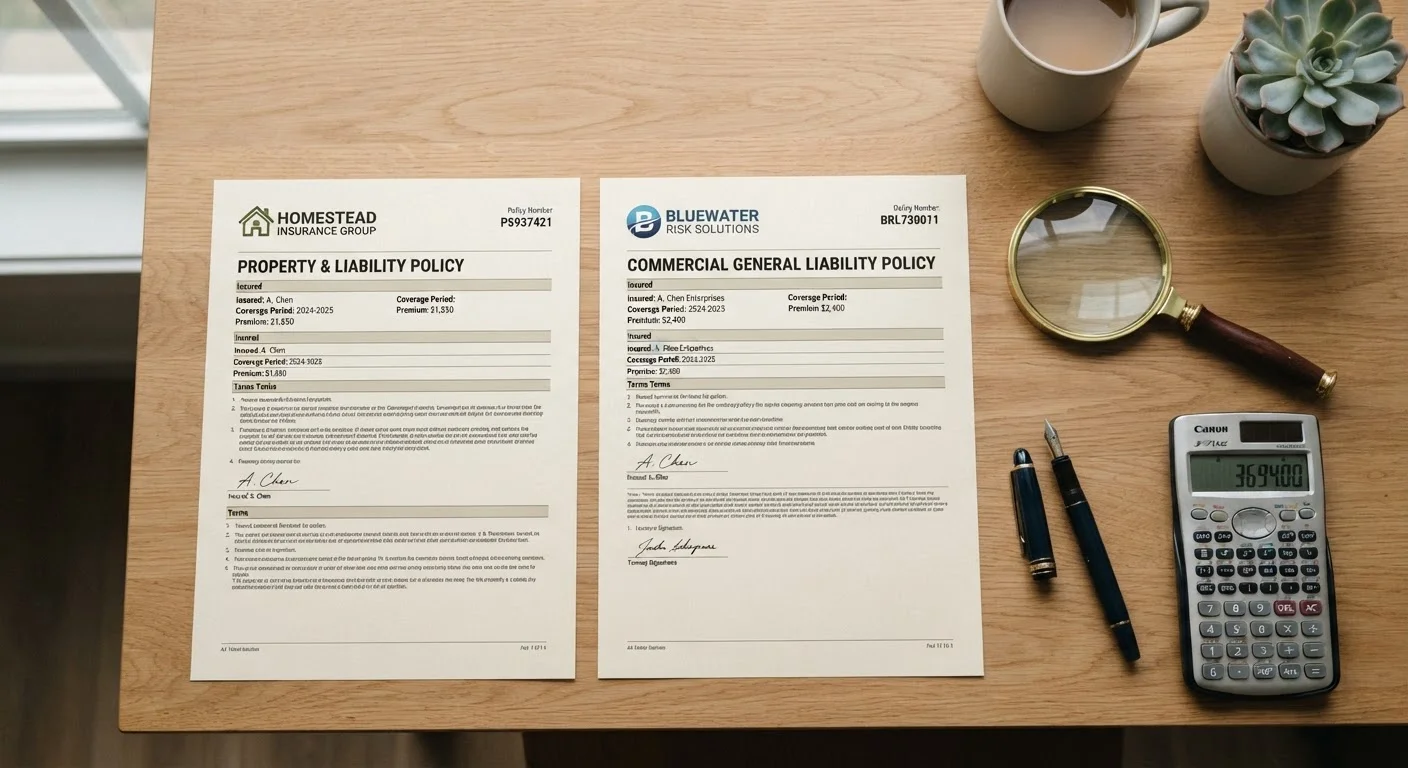
Why Price Alone Is a Misleading Starting Point
When two quotes land in your inbox at nearly the same monthly premium, it's tempting to treat them as equivalent — and just pick one. That's a common and potentially costly mistake. Insurers reach similar price points through very different combinations of coverage limits, deductibles, exclusions, and policy conditions. The premium is simply what you pay; it says very little about what you actually get.
Understanding the difference between cost and value is the foundation of smart insurance shopping. As a starting point, it helps to know what factors shape your premium in the first place — because those same factors can create significant variation in what each policy actually covers.
“The problem with buying insurance on price alone is that you don't find out what you bought until you have a claim — and by then it's too late to make a different choice.”
— J. Robert Hunter, Former Texas Insurance Commissioner and Director of Insurance at the Consumer Federation of America
The Four-Layer Framework for Comparing Quotes
Rather than scrolling to the bottom line, work through any quote stack in four layers. This approach surfaces meaningful differences that a price-first scan will miss.
Start with the declarations page, not the summary sheet
Marketing summaries highlight selling points and omit limitations. The declarations page — often called the 'dec page' — is the legally binding summary of what your policy covers, your limits, your deductible, and your named exclusions. If a quote doesn't come with one, ask for it before comparing anything else.
Compare coverage limits at the same level, not the same price
A lower-priced policy often reaches that price by offering lower coverage limits — the maximum the insurer will pay per claim or per policy period. Comparing a $300,000 liability limit against a $100,000 one at similar premiums is not an apples-to-apples comparison; it's a fundamentally different level of protection.
Read the exclusions section word for word
Exclusions define what the policy will not cover, and they are where the real differences between similarly priced policies live. Common exclusions — flood, earthquake, mold, intentional damage, business use — are often buried in dense language. Missing one can mean a denied claim on the exact loss you assumed you were protected against.
Map out your realistic total cost of a claim, not just the premium
Your true cost exposure includes the premium plus whatever you'd owe out of pocket before and after the insurer pays. A lower monthly premium paired with a high deductible, a coinsurance requirement, or a low payout cap can cost significantly more when a claim actually occurs than a slightly higher-premium policy with better terms.
Verify the insurer's financial strength and complaint record
Coverage language only matters if the insurer can and will pay claims. Independent ratings from organizations such as AM Best, Moody's, or S&P assess an insurer's financial stability. State insurance department websites publish complaint ratios showing how often customers report claim disputes relative to the company's size.
Common Comparison Traps to Avoid
Even careful shoppers fall into a few recurring traps. Watch for these when you sit down with quotes side by side.
1 in 3
Policyholders who report surprise gaps in coverage
According to consumer research cited by the Insurance Information Institute, a significant share of policyholders discover coverage gaps only when filing a claim.
40%+
Of homeowners who lack flood coverage
The National Flood Insurance Program estimates that a large majority of American homeowners are unaware that standard homeowner's policies exclude flood damage entirely.
One of the most reliable trip wires is focusing on the monthly number without accounting for the full cost of using coverage. Underestimating out-of-pocket costs is one of the most common places insurance shoppers go wrong, and a lower premium often shifts those costs rather than eliminating them. Separately, a policy's deductible structure can flip the apparent value of two otherwise similar quotes. See our framework for weighing deductible trade-offs for a structured way to think through that decision.
Coverage Terms Vary by State and Provider
Insurance is regulated at the state level in the United States, meaning coverage requirements, mandated minimums, and available policy features differ depending on where you live. A term like 'comprehensive coverage' or 'full coverage' can mean different things across different policies and states. Never assume two policies use the same definitions — read each policy's own language and ask your agent to clarify anything that isn't clear.
Quick Actions You Can Take Right Now
If you have quotes in hand, there are a few concrete steps you can take immediately to sharpen your comparison before committing to anything.
Once you've worked through this framework, a final set of questions to your insurer or agent can close remaining gaps. Our pre-finalization checklist covers the questions worth asking before you sign. And if you want to sharpen your overall sense of what makes a policy genuinely valuable — not just cheap — why cheaper premiums don't always mean better value is a useful companion read.
This article is for general informational and educational purposes only and does not constitute personalised insurance, financial, or legal advice. Coverage terms, exclusions, and eligibility vary by provider and state. Always read your actual policy documents and consult a licensed insurance agent or adviser for guidance specific to your situation.
The content on this site is for informational purposes only and is not a substitute for professional advice. Always consult a qualified professional for guidance specific to your situation.