

Our Verdict
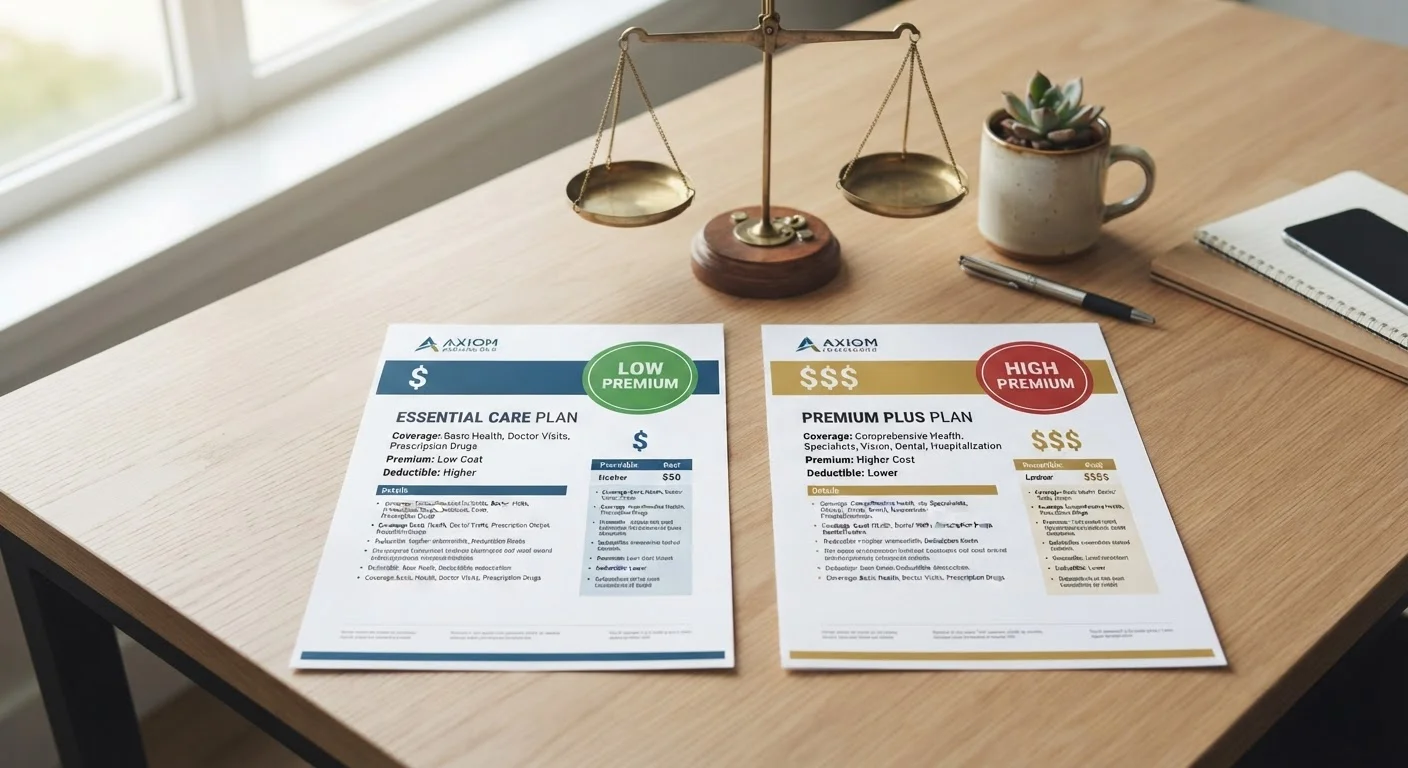
High-deductible plans make sense for generally healthy people who have savings to cover a bad year and want to reduce monthly costs. Low-deductible plans tend to serve those who use healthcare regularly, have chronic conditions, or cannot absorb large unexpected bills. There is no universal winner — the better plan is the one that matches your realistic health spending and financial safety net.
| Best for | Recommended |
|---|---|
| Healthy individuals with limited routine care needs | High-Deductible Plan |
| Those who want to maximize HSA tax advantages | High-Deductible Plan |
| People with ongoing prescriptions or frequent doctor visits | Low-Deductible Plan |
| Anyone without savings to cover a large surprise medical bill | Low-Deductible Plan |
The Core Trade-Off Explained
Every health insurance plan makes you choose, implicitly or explicitly, how you want to spread your healthcare costs across two buckets: what you pay every month (your premium) and what you pay when you actually use care (starting with your deductible). Understanding how these numbers interact is foundational — if you want a deeper primer, see our article on how premiums, deductibles, and out-of-pocket maximums work together.
A high-deductible health plan (HDHP) charges you a lower monthly premium but requires you to pay a larger amount out of pocket before the insurer starts covering most services. The IRS sets minimum thresholds for a plan to qualify as an HDHP — these thresholds are updated periodically, so check current IRS guidance for exact figures.
A low-deductible plan flips this: you pay more each month, but the insurer begins sharing costs sooner. You're essentially pre-paying for coverage through higher premiums in exchange for a smaller bill when something goes wrong.
Neither structure is a trick. They are genuinely different bets on how much care you'll use and how prepared you are to handle a large bill in any given year.
How to Think About Your Own Situation
Before comparing plan numbers in a vacuum, answer three honest questions about yourself:
- How often do you use healthcare? If you have a chronic condition, take regular prescriptions, or see specialists, low-deductible coverage typically pays off faster. If you're generally healthy and rarely seek care beyond annual checkups, a high-deductible plan may cost you less overall.
- Could you cover your full deductible today? A high-deductible plan is only a sound choice if you actually have — or can build — savings to cover that deductible in a rough year. Without that cushion, a medical emergency could force debt. Our related guide on underestimating out-of-pocket costs covers exactly how people get caught off guard here.
- Are you eligible for an HSA? HDHPs that meet IRS criteria allow you to open a Health Savings Account — a triple-tax-advantaged account you can use for qualified medical expenses. Contributions reduce taxable income, growth is tax-free, and qualified withdrawals are tax-free. This benefit can meaningfully offset the risk of a high deductible over time.
Build Your HSA Before You Need It
If you choose an HDHP and qualify for an HSA, start contributing as early as possible — even modest regular deposits build a buffer that reduces the sting of a high deductible. Unused HSA funds roll over year to year and can even be invested for long-term growth. Think of it as a dedicated healthcare emergency fund with a tax bonus.
It's also worth distinguishing the deductible from the out-of-pocket maximum, which caps your total annual exposure. See how deductibles and out-of-pocket maximums differ for a clear side-by-side explanation.
Comparing the Two Structures
The table below summarizes where each plan type tends to stand across key decision factors. Keep in mind that actual figures vary widely by plan, insurer, and state — this is a structural comparison, not a specific product recommendation.
| High-Deductible Plan | Low-Deductible Plan | |
|---|---|---|
| Monthly Premium | Lower | Higher |
| Deductible Amount | Higher — you pay more before coverage starts | Lower — coverage kicks in sooner |
| HSA Eligibility | Yes, if plan meets IRS HDHP criteria | Generally no |
| Best for Routine Care Users | Less favorable | More favorable |
| Financial Risk in a Bad Year | Higher exposure before out-of-pocket max | Lower exposure before out-of-pocket max |
| Savings Cushion Required | Strongly recommended | Less critical |
| Ideal Health Profile | Generally healthy, infrequent care | Chronic conditions, frequent care needs |
~57%
Workers enrolled in an HDHP
According to KFF's Employer Health Benefits Survey, a majority of covered workers are now enrolled in a plan with a deductible of $1,000 or more.
$1,735
Average individual deductible in employer plans
KFF's annual employer health benefits survey data shows average single-coverage deductibles have risen substantially over the past decade.
One underappreciated factor: low premiums can mask high total costs. Cheaper premiums don't always mean better value — a plan with a $200 lower monthly premium but a $3,000 higher deductible could cost more the moment you have any significant claim.
If you're evaluating multiple quotes side by side, a structured approach helps. See our framework for comparing insurance quotes beyond the price for a practical method.
Making a Decision That Holds Up
Once you've worked through the questions above, a few practical steps help translate your thinking into an actual plan choice:
- Run a break-even calculation. Subtract the annual premium difference between the two plans. If the high-deductible plan saves you $1,200 per year in premiums but has a $2,500 higher deductible, you'd need to go roughly two years without hitting that deductible to come out ahead financially.
- Check network and benefit differences. Deductible level isn't the only variable. Plans also differ in provider networks, covered services, and cost-sharing structure. HMO vs. PPO plan structure is a separate but related factor worth understanding.
- Consider your family situation. If you're covering dependents, family deductibles are typically higher than individual ones, and a single family member's care can exhaust a large deductible quickly.
- Revisit annually. Your health situation and financial position change. A plan that fit well last year may not be optimal this year.
For guidance on building the savings buffer that makes an HDHP viable, the saving and debt hub offers practical frameworks.
This article is for general informational and educational purposes only and does not constitute personalized insurance, financial, or legal advice. Coverage terms, eligibility, and costs vary by plan, insurer, and state. Always read your policy documents carefully and consult a licensed insurance agent or qualified financial adviser before making decisions about your coverage.
The content on this site is for informational purposes only and is not a substitute for professional advice. Always consult a qualified professional for guidance specific to your situation.