

Our Verdict
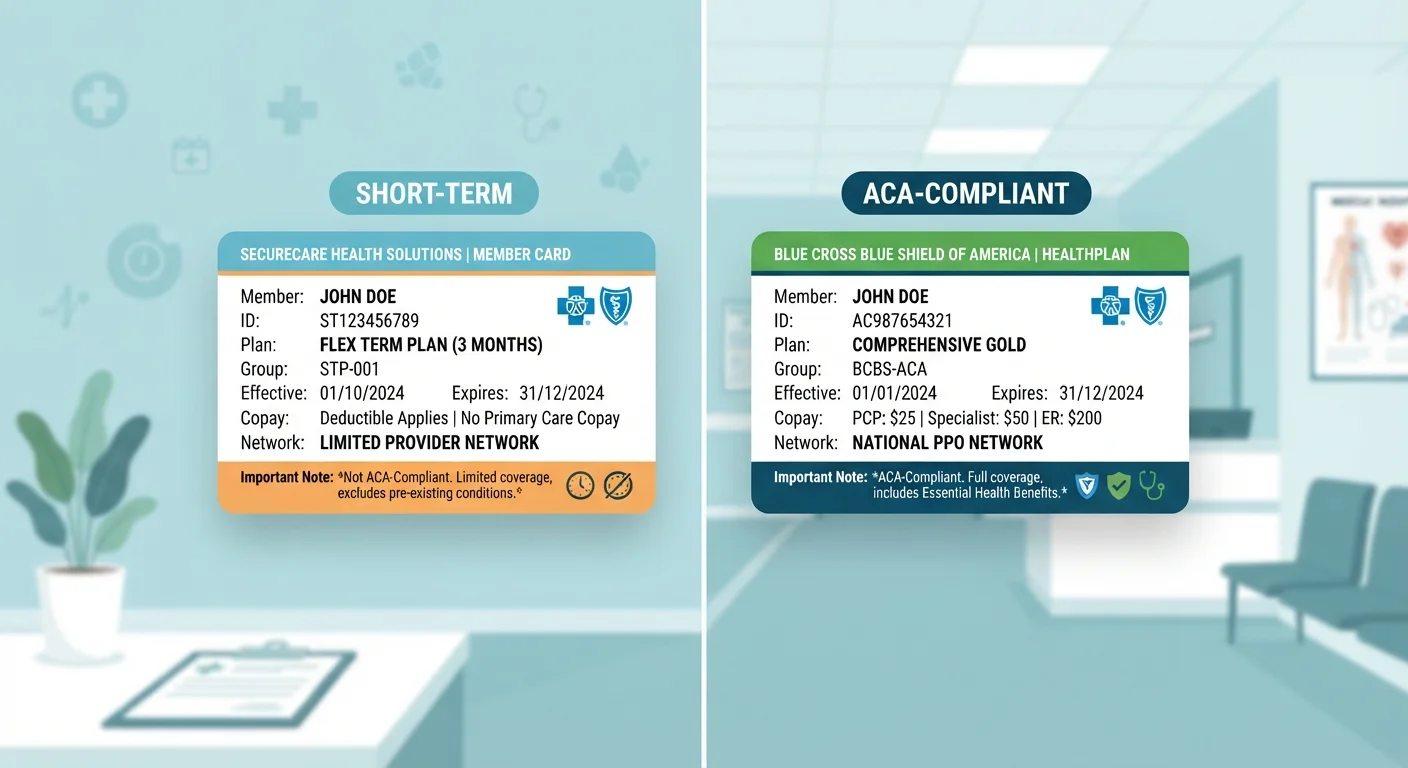
ACA-compliant plans offer broader, more predictable protection — especially for people with ongoing health needs or concerns about pre-existing conditions. Short-term plans may suit healthy individuals facing a brief coverage gap, but their exclusions and limits create real financial risk if something goes wrong. This is general information only; consult a licensed insurance professional about your specific situation.
| Best for | Recommended |
|---|---|
| Those needing comprehensive, reliable coverage year-round | ACA-Compliant Plan |
| Generally healthy individuals bridging a short, defined coverage gap | Short-Term Plan (with caution) |
| Anyone with pre-existing conditions or chronic health needs | ACA-Compliant Plan |
| Those who qualify for marketplace premium tax credits | ACA-Compliant Plan |
What These Two Plan Types Actually Are
When people talk about health insurance options outside of employer coverage, two categories come up most often: ACA-compliant plans and short-term health plans. They're both called health insurance, but they operate under very different rules.
ACA-compliant plans — sold on state and federal marketplaces — must meet the requirements set by the Affordable Care Act. That means they cover a defined set of essential health benefits, cannot reject applicants based on medical history, and must limit what you pay out of pocket each year. For background on how coverage categories work, see our plain-English breakdown of major insurance coverage types.
Short-term health plans are not subject to ACA rules. They're issued under separate federal and state regulations, designed originally to fill brief gaps in coverage — say, a few weeks between jobs. Over time, some insurers began marketing them as lower-cost alternatives to marketplace plans, which is where the confusion started.
The Core Differences That Affect Your Coverage
| Feature | ACA-Compliant Plan | Short-Term Health Plan | |
|---|---|---|---|
| Pre-existing condition coverage | Required — cannot be denied | Typically excluded | |
| Essential health benefits | 10 categories required by law | Not required; varies by plan | |
| Annual out-of-pocket limit | Federally capped each year | Plan-set; may be much lower | |
| Premium tax credit eligibility | Yes, if income qualifies | No | |
| Coverage duration | Full year; renewable annually | Months; federally and state limited | |
| Medical underwriting | Not permitted | Common; health history reviewed | |
| Enrollment timing | Open enrollment or qualifying event | Available year-round |
The table above shows the structural gaps clearly, but it's worth unpacking what these differences actually mean when you need care.
Pre-existing conditions are the biggest practical divide. ACA plans cannot deny coverage or charge more because of your medical history. Short-term plans routinely exclude conditions you already have — and the definition of "pre-existing" can be broad, sometimes including anything you received treatment for in the past several years.
Essential health benefits — things like mental health services, prescription drugs, maternity care, and preventive screenings — are guaranteed under ACA plans. Short-term plans are not required to cover any of them. A short-term plan might cover an emergency room visit but exclude the follow-up medications or specialist care you need afterward.
Out-of-pocket limits protect ACA enrollees from unlimited cost exposure. Short-term plans may set their own annual and lifetime benefit caps, meaning a serious illness could exhaust your coverage far sooner than you'd expect. Understanding how premiums, deductibles, and out-of-pocket maximums interact is essential when evaluating either plan type.
Short-Term Plans Can Leave Serious Gaps
A short-term plan may look like health coverage but behave very differently when you file a claim. Benefit caps, pre-existing condition exclusions, and missing essential benefits can result in large, unexpected bills. Read any plan's exclusions carefully before enrolling, and don't assume a lower premium means adequate protection.
Cost Differences and the Tax Credit Question
Short-term plans typically carry lower monthly premiums than ACA marketplace plans. That difference is real, but it reflects the reduced coverage, not greater efficiency. You're paying less because the plan covers less and can turn away higher-risk applicants.
ACA marketplace plans, on the other hand, may be eligible for federal premium tax credits if your income falls within qualifying ranges. Those credits can significantly reduce what you actually pay per month — sometimes making a comprehensive plan cost less than a short-term alternative. Short-term plans do not qualify for these credits under current federal law.
If you're weighing cost across plan structures, the high-deductible vs. low-deductible framework can help you think through how upfront premium savings compare to potential out-of-pocket exposure. The same logic applies here: a lower premium only saves money if you don't need the coverage that's missing.
Check Your Marketplace Options First
Before assuming a short-term plan is cheaper, look up what marketplace plans cost after any premium tax credit you may qualify for. Credits can substantially close the price gap — or eliminate it. Healthcare.gov and your state's marketplace are the official sources for accurate subsidy estimates based on your income and household size.
Regulatory Limits and State Variation
Federal rules governing short-term plans have shifted over time, affecting how long a single plan can last and whether it can be renewed. As of recent federal rulemaking, short-term plans have been subject to stricter duration limits — but some states have gone further, restricting or effectively banning them, while others allow broader use. Your state's insurance commissioner's website is the most reliable place to check what's permitted where you live.
ACA-compliant plans have defined open enrollment windows. Outside of those windows, you generally need a qualifying life event — job loss, marriage, birth of a child — to enroll. Short-term plans can often be purchased at any time, which makes them appealing when someone misses open enrollment, even though they offer substantially less protection.
If you're comparing health plan structures more broadly — not just short-term vs. ACA, but also how network and referral rules work — our HMO vs. PPO breakdown covers those distinctions in detail.
This article provides general information about health insurance plan types and is not personalized insurance, financial, or legal advice. Coverage terms, exclusions, and regulations vary by provider and state. Read all policy documents carefully and consult a licensed insurance professional before making coverage decisions.
The content on this site is for informational purposes only and is not a substitute for professional advice. Always consult a qualified professional for guidance specific to your situation.