

Start here
Why Starting From Zero Is Actually an Advantage
Next
The Foundation: What Every Wardrobe Needs First
Then
Understanding Fit Before You Buy Anything
When you're ready
Building on a Budget Without Sacrificing Quality
Final step
Dressing With Intention Going Forward
Why Starting From Zero Is Actually an Advantage
Building a wardrobe from scratch can feel overwhelming — but it's also a genuine opportunity. You're not correcting years of impulse buys or trying to retrofit a style around pieces that don't work together. You get to be intentional from day one.
The most common mistake beginners make is rushing to fill a closet quickly. A small, cohesive wardrobe almost always outperforms a large, scattered one. Think of it like any foundation: the stronger and more deliberate it is, the more confidently you can build on top of it.
Once you've established your core pieces, you'll be in a great position to do a proper wardrobe audit to assess what's working and what gaps remain.
Wardrobe basics
Simple, neutral clothing pieces that can be combined with many other items in your wardrobe, forming the backbone of everyday outfits.
Cost-per-wear
A way to measure clothing value by dividing the price by how many times you expect to wear it — a high-use item at a higher price can be a better investment than a cheap item worn rarely.
Capsule wardrobe
A curated, small collection of versatile pieces that work well together, designed to maximize outfit options while minimizing clutter.
Fit alteration
A tailoring adjustment made to a garment after purchase — such as shortening a hem or taking in a seam — so it fits your body more precisely.
Foundational piece
A clothing item chosen specifically because it pairs easily with many other pieces and suits a range of occasions, forming the base of a functional wardrobe.
The Foundation: What Every Wardrobe Needs First
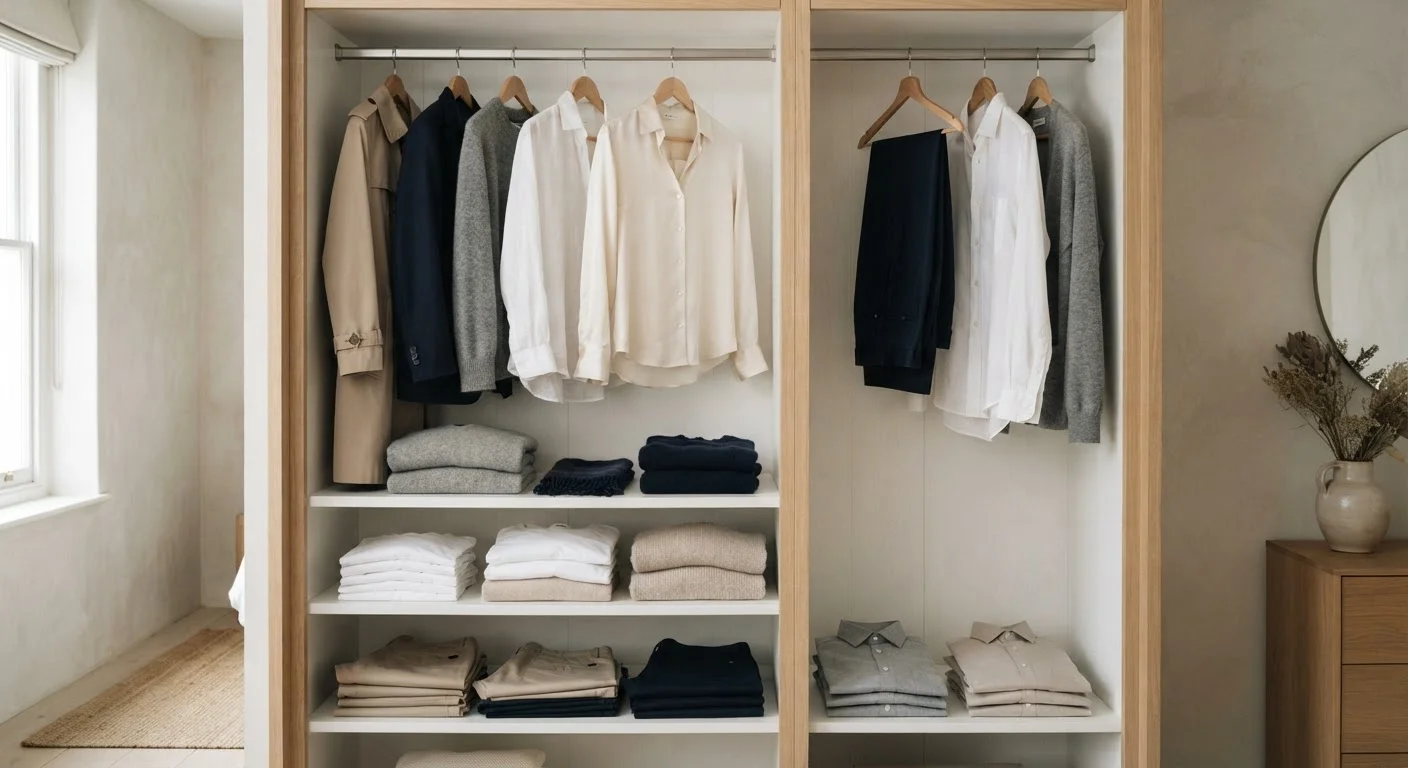
Foundational pieces — sometimes called wardrobe basics or essentials — are items that can be mixed and matched across multiple outfits without clashing. They tend to be neutral in color, simple in cut, and appropriate for more than one context.
Common foundational categories include:
- Tops: A plain white or grey crew-neck tee, a button-front shirt in a neutral tone, and a lightweight sweater or crewneck.
- Bottoms: A well-fitting pair of dark jeans or trousers, and one comfortable casual option like chinos or relaxed-fit pants.
- Outerwear: One layer that handles your most common weather — a trench coat, denim jacket, or structured cardigan depending on your climate.
- Footwear: A clean white sneaker or simple leather shoe that transitions across casual and slightly dressy settings.
For a deeper look at how these pieces work together, the capsule wardrobe building blocks guide is an excellent companion read.
Understanding Fit Before You Buy Anything
Fit is the single most impactful element of how clothing looks and feels. A well-fitting garment at any price point will read as more polished than an expensive piece that doesn't suit your body proportions.
What does good fit look like in practice?
- Shoulders: Shirt and jacket shoulder seams should sit at the edge of your shoulder — not drooping onto your arm or pulling toward your neck.
- Chest and torso: Fabric should lie smoothly without pulling at buttons or bunching at the sides.
- Length: Tops should typically hit at or just below the hip. Trouser hems should graze the top of your shoe without excessive stacking.
Basic alterations — hemming pants, taking in a waist — are relatively affordable and can transform an off-the-rack piece. Building a relationship with a local tailor is one of the most underrated style moves a beginner can make.
Try Before You Commit to a Silhouette
If you're unsure what cut or silhouette suits you, try pieces on in-store before buying — even if you intend to shop online later. This gives you a real sense of how different proportions land on your body. Knowing your preferred fit in a specific garment type (e.g., straight-leg vs. slim-fit) makes online shopping far more reliable.
Building on a Budget Without Sacrificing Quality
Clothing is a spending category like any other, and treating it as such leads to smarter decisions. Before shopping, it helps to understand what you can realistically allocate. If you're new to managing your finances, the personal budgeting guide walks through how to set spending categories from scratch.
Once you know your budget, prioritize cost-per-wear rather than sticker price. An item you'll wear 60 times at $60 is a better value than a trendy $20 piece worn twice. When evaluating quality on a budget, check:
- Fabric content: Natural fibers like cotton, linen, and wool generally hold their shape and breathe better than synthetics, though blends can offer good durability.
- Stitching: Look at seams — tight, even stitching indicates better construction.
- Weight: Lightweight, flimsy fabric often signals a shorter lifespan.
Secondhand shopping, clothing swaps, and end-of-season sales are all practical ways to access better-quality pieces at lower price points — no urgency required, just patience.
Don't Buy for a Future Version of Yourself
It's tempting to purchase aspirational pieces — the blazer for a job you're hoping for, the dress for an event that hasn't materialized. These items almost always go unworn and drain your clothing budget. Buy for your life as it is right now, and add occasion pieces only when the occasion is confirmed.
Dressing With Intention Going Forward
A wardrobe built with intention grows smarter over time. Before any new purchase, a useful filter is to ask: does this work with at least three things I already own? If the answer is no, the piece may create more clutter than value.
As seasons change, your wardrobe needs to adapt too. Layering strategies and fabric choices shift throughout the year — the seasonal styling guide offers practical guidance on transitioning your core pieces through different climates.
Personal style isn't a destination — it evolves. Starting with versatile basics gives you a stable platform to experiment from, rather than locking you into a look prematurely. The goal isn't a perfect wardrobe; it's a wardrobe that works consistently for your real, everyday life.
Wardrobe Audit Checklist
Once your foundational wardrobe is in place, a structured audit helps you identify what's working and what gaps remain before you spend anything more.
Seasonal Styling Strategies
Learn how to adapt your core wardrobe pieces across seasons using layering techniques and fabric choices that keep outfits practical year-round.
Personal Budget Builder
If you're setting a clothing budget for the first time, this plain-language guide walks through how to structure your overall personal spending from scratch.
Frequently Asked Questions
Most style experts suggest that 10–15 well-chosen, versatile pieces can cover the majority of everyday situations. The number matters far less than how well those pieces work together. Focus on combinations, not quantity.
Start with the clothing categories you need most often — typically everyday tops, a well-fitting pair of pants or jeans, and one layering piece. Occasion-specific items like formalwear can wait until you have the basics covered.
Generally, pieces you wear most frequently — like plain tees, denim, and everyday shoes — can justify a higher cost-per-wear. That said, spending more doesn't guarantee quality; check fabric content and construction instead of relying on price alone.
Personal style takes time to develop and often emerges through experimentation. Saving images of outfits you genuinely respond to — not just admire on others — is a practical starting point. Build with neutrals first so you're not locked into a look you've outgrown.
Absolutely. Secondhand shopping can stretch your budget significantly and is a practical way to experiment with styles before committing. The same rules apply: check fit, fabric, and whether the piece works with things you already own.
Before purchasing, ask yourself what three other items in your wardrobe that piece would pair with. If you can't name them, it's a signal the item may not integrate well. The <a href="/style-beauty/style-tips/wardrobe-audit-questions-to-ask-before-you-keep-donate-or-buy">wardrobe audit method</a> applies equally to new purchases.
The content on this site is for informational purposes only and is not a substitute for professional advice. Always consult a qualified professional for guidance specific to your situation.