

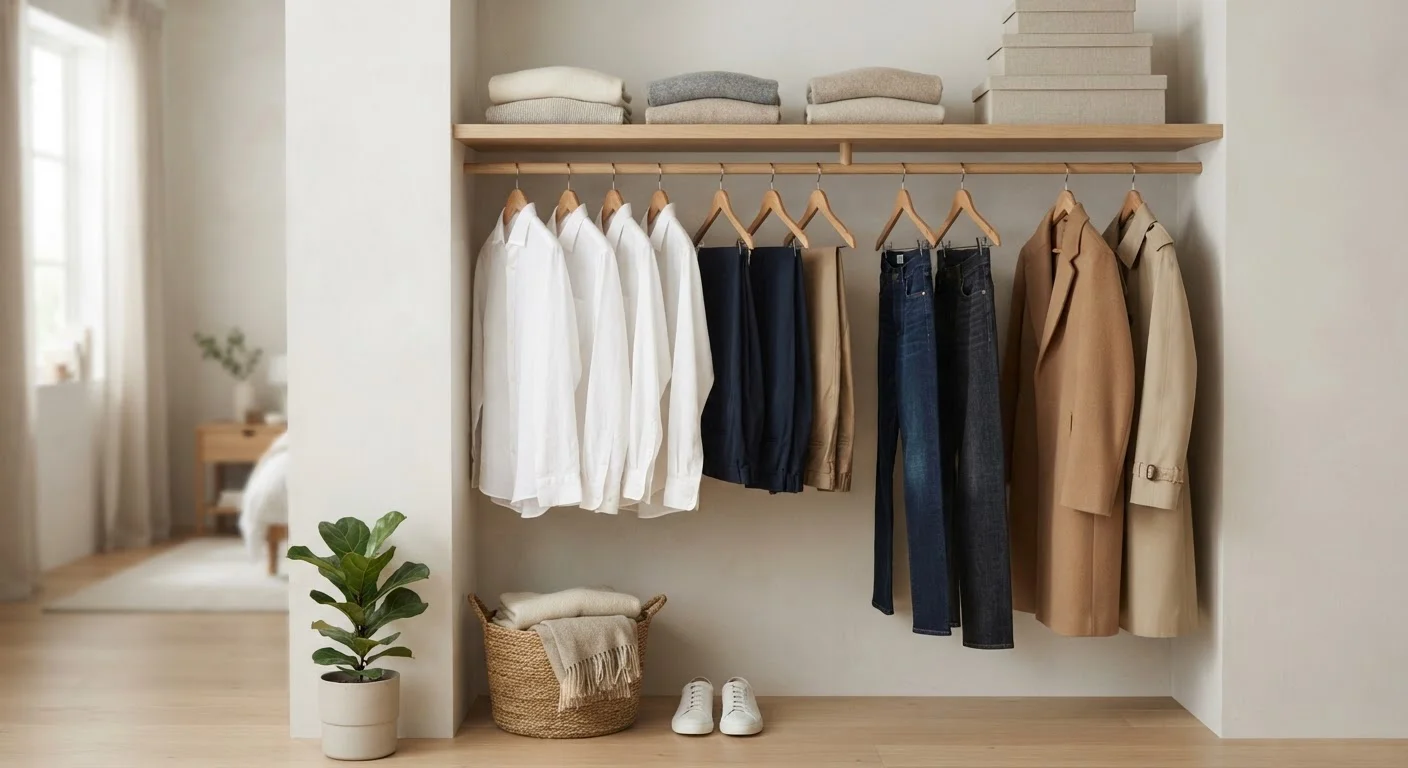
What Makes a Capsule Wardrobe Work
The idea behind a capsule wardrobe is simple: a small, intentional collection of versatile pieces that mix and match freely, reducing decision fatigue and making getting dressed genuinely easier. It's not a rigid formula — it's a framework you shape around your own lifestyle, body, and preferences.
| Typical capsule size | 25–50 pieces (Commonly cited range across style guides; varies by lifestyle) |
| Core color palette | 2–3 neutrals + 1–2 accent tones |
| Versatility benchmark | Each piece pairs with 3+ others |
| Wardrobe category focus | Tops, bottoms, outerwear, footwear, accessories |
| Most adaptable bottom cited | Dark-wash straight-leg jeans (Widely referenced in style editorial) |
| Starting approach | Audit existing closet before buying |
Before building one, it helps to understand what "foundational piece" actually means. A true building block isn't just something you wear a lot — it's something that works across multiple contexts, pairs with at least three other items in your closet, and holds up in fit and construction over time. For a fuller picture of what this approach offers (and where it has limits), see our balanced look at capsule wardrobe pros and cons.
If you're starting your wardrobe from scratch, our beginner's wardrobe guide covers fit, intention, and prioritization in detail.
The Core Categories to Cover
Think of a capsule in terms of categories rather than an exact item count. Most functional capsules touch on five zones:
- Tops — A few well-fitting solid-colored or subtly patterned shirts, blouses, or tees in neutral shades anchor almost any outfit. Crisp white, soft grey, and navy tend to integrate easily across seasons.
- Bottoms — Dark-wash straight-leg jeans are widely cited as among the most adaptable bottoms for casual to smart-casual dressing. Pair them with tailored trousers in a neutral for more formal contexts.
- Outerwear — One lightweight layer (like a blazer or structured cardigan) and one heavier coat carry enormous weight in versatility. A trench or classic wool coat can transition across weather and occasions with ease. See seasonal layering strategies for guidance on adapting outerwear year-round.
- Footwear — Three pairs typically suffice for a basic capsule: a clean sneaker or flat, a low heel or loafer, and a casual boot. Stick to neutral or complementary tones so they pair without effort.
- Accessories — Often overlooked as structural pieces, accessories reshape an outfit's tone entirely. A belt, a quality bag, and a few simple jewelry items can shift the same outfit from casual to polished. Explore how in our piece on accessories as outfit architecture.
Capsule wardrobe
A curated, limited set of clothing items chosen to work together interchangeably. The goal is maximum outfit options from a minimum number of pieces.
Foundational piece
A garment versatile enough to pair with most other items in a wardrobe across multiple contexts and occasions, often in a neutral color and simple silhouette.
Neutral palette
A color scheme built around hues like white, black, navy, grey, camel, and olive that coordinate easily with each other and with bolder accent colors.
Smart-casual
A dress code that sits between formal and relaxed — polished but not a suit. Often achieved by pairing structured pieces (like a blazer) with casual basics (like jeans).
Cost-per-wear
An informal calculation dividing the price of a garment by the number of times it's worn. Higher-quality items worn frequently often have a lower cost-per-wear than cheap items worn rarely.
Fit, Quality, and the Budget Question
A capsule wardrobe only functions if the pieces actually fit your body well. Off-the-rack sizing varies significantly across retailers, so treat fit as non-negotiable — a well-fitted modest piece will always outperform an expensive item that pulls or gaps. Minor tailoring adjustments (hemming, taking in a seam) are often inexpensive and dramatically improve the result.
The question of how much to spend is genuinely personal. There's a reasonable case for investing more in high-contact items like shoes and outerwear that endure daily wear and weather exposure, while spending less on basics like cotton tees that will be replaced more frequently. For a thorough look at both sides of that trade-off, see spending more on fewer clothes vs. buying in volume.
Budget-consciousness and dressing well aren't at odds. Enduring style principles on a tight budget can guide anyone working within spending constraints. More broadly, treating your wardrobe as a spending category — planned and tracked — connects to the kind of intentional approach covered in budgeting basics.
The goal isn't a perfect 10-piece collection. It's a closet where every item earns its place — and getting dressed in the morning takes less effort, not more.
The content on this site is for informational purposes only and is not a substitute for professional advice. Always consult a qualified professional for guidance specific to your situation.