

Why Budget Dressing Is a Skill, Not a Compromise
Style has never been purely about money. Plenty of well-dressed people operate on tight budgets, and plenty of people with large clothing budgets still look thrown together. The difference is almost always intentionality — knowing what you're buying, why you're buying it, and how it fits into what you already own.
This isn't about deprivation or endless thrifting tips. It's about applying a few durable principles that hold up regardless of your income level. Whether you're working with $50 a month or $200, the same logic applies. For a broader foundation, our guide on enduring dressing principles covers what stays useful across every trend cycle.
Prioritize fit above all other factors when evaluating any garment.
Fit is the single variable that most determines whether a piece of clothing looks intentional or haphazard. An inexpensive item in the right size and silhouette consistently outperforms a costly one that doesn't sit correctly. Basic tailoring adjustments — hemming trousers, taking in a waist — are often inexpensive and dramatically improve how clothes look.
Build around a small core of neutral, mix-and-match pieces before adding anything else.
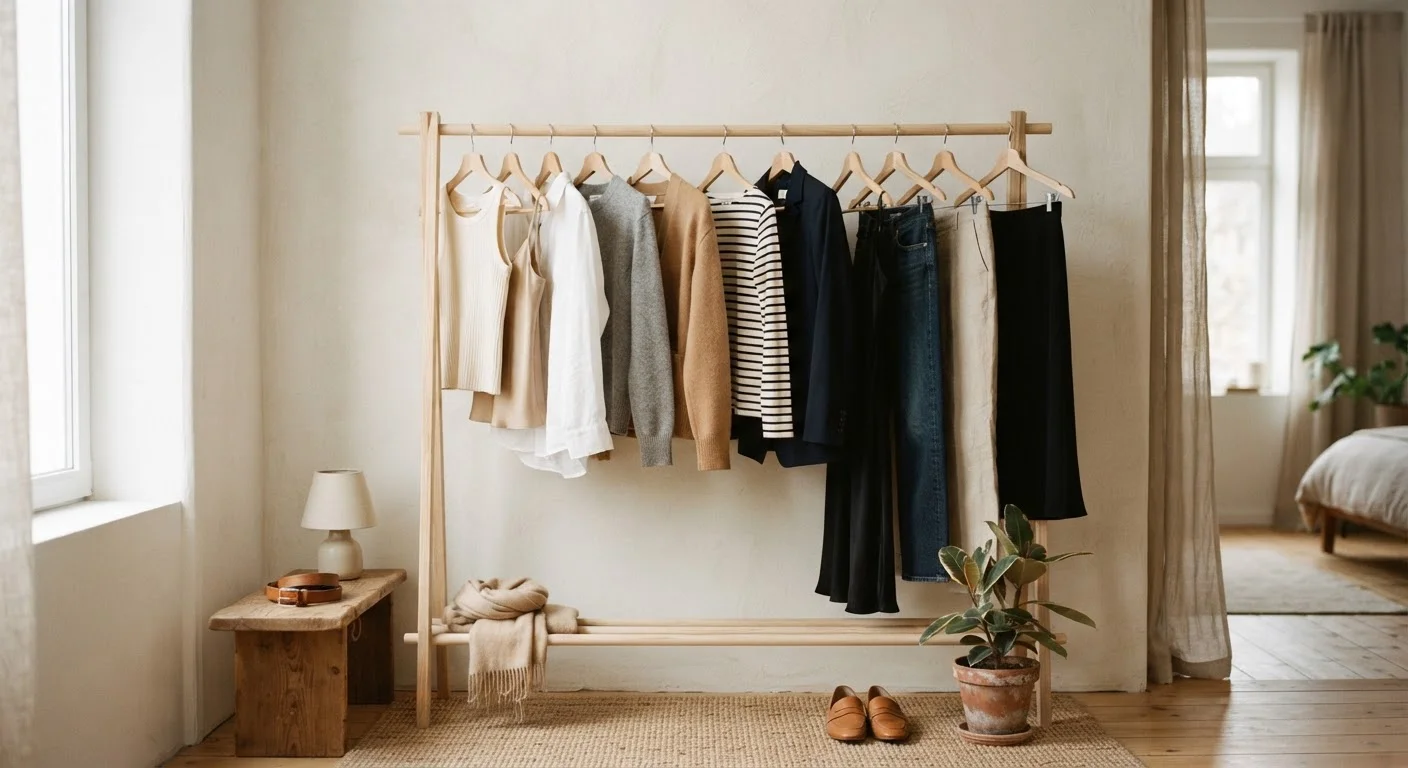
A wardrobe built on versatile neutrals — navy, white, grey, tan, black — generates far more outfit combinations than a similarly sized collection of individual statement pieces. This multiplies your options without multiplying your spending. The fashion basics hub outlines how to think about these foundational decisions.
Shop secondhand intentionally, with a specific list rather than browsing open-endedly.
Thrift and consignment shopping can surface genuinely quality pieces at low prices, but open-ended browsing often leads to accumulating items that don't integrate into your existing wardrobe. Going in with a focused list — 'I need a camel-coloured cardigan and a pair of dark straight-leg jeans' — keeps the process productive.
Care for every garment according to its label instructions to extend its usable life.
How you launder, dry, and store clothing has an outsized effect on how long it lasts. Most fabric degradation — pilling, shrinking, colour loss — is accelerated by incorrect washing temperatures, tumble drying, or improper storage. Extending a garment's life by even one or two additional years makes a real difference to overall clothing spend.
Avoid impulse buying by imposing a 48-hour waiting period before any non-essential purchase.
Impulse purchases are one of the primary reasons closets fill with unworn items. A short waiting period lets initial enthusiasm fade and allows you to assess whether the item genuinely fills a gap or simply seemed appealing in the moment. Most impulse urges do not survive 48 hours.
The Practices That Make the Biggest Difference
Budget dressing done well is about working smarter within constraints. These aren't abstract ideals — they're concrete habits that compound over time, helping you build a wardrobe that genuinely serves you.
For readers thinking about whether to invest more in fewer pieces or buy in volume, our honest breakdown of quality versus quantity in clothing lays out both approaches clearly. And if you're building from scratch, the capsule wardrobe building blocks guide is an ideal starting point.
The Hidden Cost of Cheap Basics
One counterintuitive truth about budget dressing: the cheapest item isn't always the most economical choice. Fabric that pills after three washes, seams that split after a season, or a fit so generic it flatters no one — these are real costs that don't show up on the price tag. Our article on why cheap basics often cost more in the long run walks through exactly what to watch for.
~30%
Clothes never worn after purchase
Research cited by various sustainability organizations suggests roughly 30% of garments in the average wardrobe are never worn after being purchased.
2–3x
Lifespan extension with proper care
Fabric care experts and clothing manufacturers generally estimate that following correct laundering and storage instructions can extend a garment's wearable life two to three times longer.
The smarter move is to identify which pieces in your wardrobe you rely on most — the ones you reach for week after week — and allocate slightly more budget there, while spending less on lower-stakes items like seasonal accessories or trend pieces you may only wear a few times.
If you're also working to manage spending across other areas of life, the guide to saving on a tight budget without feeling deprived offers practical habits that complement a more intentional approach to clothing spending.
“Style is a way to say who you are without having to speak. Knowing yourself is the foundation — not the budget.”
— Rachel Zoe, Fashion designer and stylist
Putting It All Together
Dressing well on a budget isn't a one-time project — it's an ongoing practice of editing, caring for what you own, and buying with genuine intention. Over time, these habits produce a wardrobe that feels cohesive and works hard for you, rather than a closet full of things that seemed like good ideas in the moment.
Understanding your personal preferences before shopping is a foundational step that many people skip. Our piece on what personal style actually means is a useful read before your next purchase. And if style rules are making you second-guess yourself, check out the style rules actually worth breaking — knowing which guidelines have real logic and which are just folklore is genuinely freeing.
Seasonal Wardrobe Transitions on a Budget
One often-overlooked budget strategy is dressing for seasonal transitions thoughtfully rather than buying a new seasonal wardrobe each year. Layering, fabric weight selection, and a handful of transitional pieces can carry a core wardrobe across multiple seasons with minimal additional spending. Our guide to seasonal styling approaches covers practical strategies for making this work.
The content on this site is for informational purposes only and is not a substitute for professional advice. Always consult a qualified professional for guidance specific to your situation.