

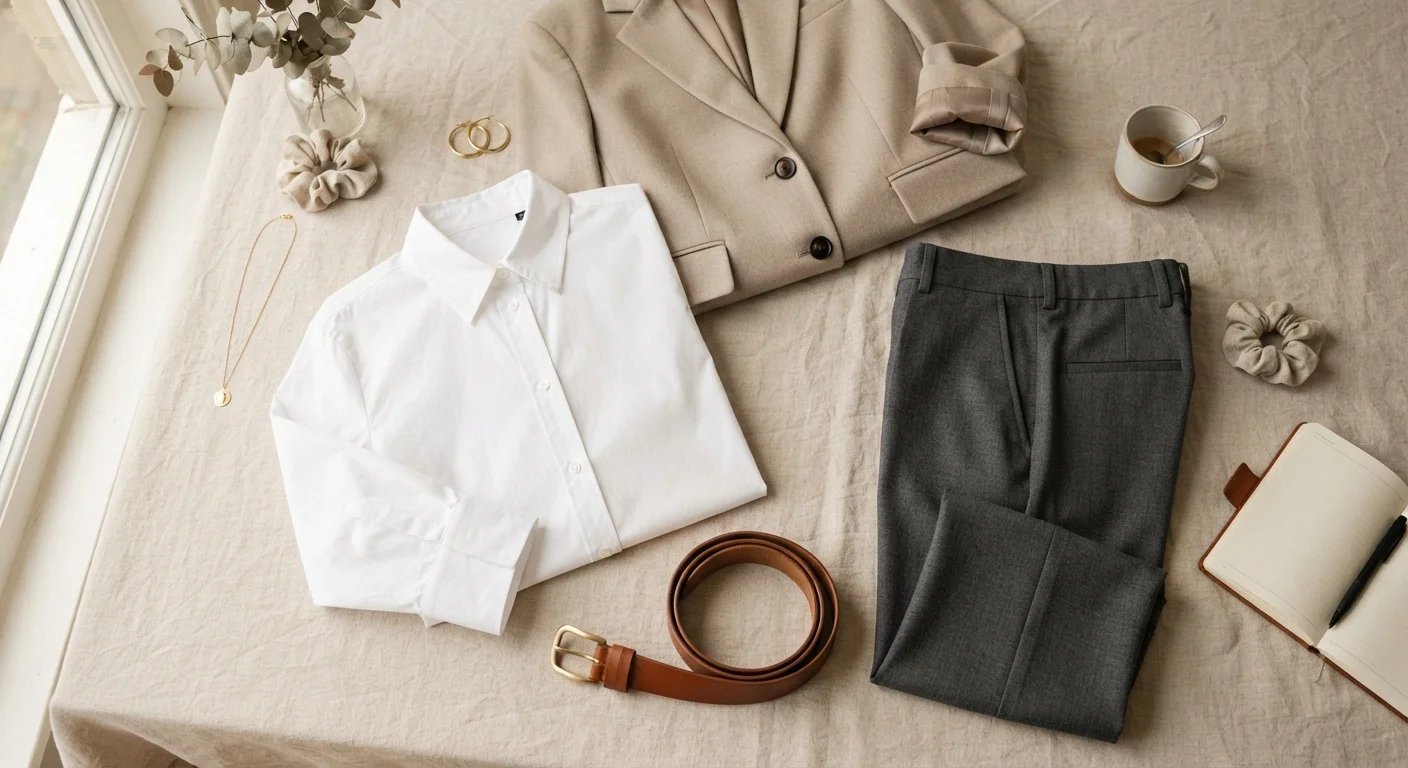
Why Certain Principles Outlast Every Trend
Fashion cycles are relentless. What's everywhere one season disappears the next, making it easy to feel perpetually behind. But beneath the churn of trends, a set of dressing principles has quietly remained useful decade after decade — not because they're rigid rules, but because they're rooted in how clothing interacts with the human body and everyday life.
These aren't about following a dress code or spending a certain amount. They're about understanding what makes an outfit work — and why. Once you internalize them, getting dressed becomes less guesswork and more confidence. For a deeper look at how trends and personal style relate, see how trends and personal style interact.
Prioritize fit above all other garment qualities.
No fabric, color, or silhouette compensates for clothing that doesn't fit well. Ill-fitting clothes create visual noise and can undermine an otherwise strong outfit. A tailor can adjust inexpensive pieces into something that looks genuinely polished.
Dress for your actual lifestyle, not an aspirational one.
A wardrobe built around occasions you rarely attend creates friction every morning. When clothing aligns with your real daily life — your commute, your work environment, your weekend habits — getting dressed becomes easier and purchases feel more justified.
Use proportion intentionally to create visual balance.
Proportion — the relationship between the volume of a top and a bottom, or between clothing and accessories — affects how an outfit registers visually. Balancing a voluminous silhouette with something more fitted creates structure and intention rather than looking accidental.
Build a cohesive color palette across your wardrobe.
When clothing shares a consistent color logic — even a loose one — more outfit combinations become possible with fewer pieces. This reduces decision fatigue and makes each item feel more versatile.
Invest attention in fabric quality and care, not just price.
How a fabric moves, drapes, and holds its shape over time directly affects how an outfit looks and how long pieces remain wearable. Understanding basic fabric properties helps you make smarter decisions at any price point.
Let one element of an outfit do the most work.
Outfits with a clear focal point — one interesting piece, one bold color, one standout texture — tend to read more intentionally than looks where every element competes for attention. Restraint in styling usually signals confidence.
Practical Application: Putting Principles to Work
Knowing these principles is one thing — applying them to a real wardrobe is another. The good news is that none of these concepts require a shopping overhaul. They work best when applied incrementally, starting with what you already own.
If you're building from scratch or refocusing a cluttered wardrobe, consider starting with foundational pieces that support multiple principles at once. Our guide to capsule wardrobe building blocks walks through exactly that. And if budget is a concern, dressing well on a tight budget applies these same principles in a cost-conscious context.
Principles Apply at Every Price Point
None of the principles covered here require a specific budget. Fit, proportion, and cohesion are considerations that apply whether a piece cost ten dollars or ten times that. The goal is to make deliberate choices with what you have — not to spend more.
When Rules Bend and Principles Hold
It's worth distinguishing between fashion rules — which are often arbitrary and culturally specific — and dressing principles, which are grounded in practicality and proportion. Rules like "never mix prints" or "don't wear white after Labor Day" have no real functional basis. Principles like "consider how your outfit reads from a distance" or "repeat a color to create visual cohesion" have observable, repeatable effects.
“Style is knowing who you are, what you want to say, and not giving a damn. Fashion is what the industry offers you each season; style is what you do with it.”
— Quentin Bell, Art critic and biographer, author of writings on aesthetics and culture
That distinction matters because it frees you to experiment without abandoning what works. Many so-called rules are actually worth questioning — see which style rules are worth breaking for a closer look. The principles in this article, by contrast, tend to hold even when you push against convention. Seasonal dressing strategies are another area where these principles prove their staying power — proportion and layering logic apply across climates and wardrobes alike.
Explore more actionable style tips across every aspect of getting dressed with intention.
The content on this site is for informational purposes only and is not a substitute for professional advice. Always consult a qualified professional for guidance specific to your situation.