

Our Verdict
The capsule wardrobe is a genuinely useful framework for simplifying how you get dressed and spend on clothing — but it's not a universal solution. Its benefits are real for people who value consistency, hate clutter, or want to be more intentional with their clothing budget. Its limitations are equally real for those with multi-faceted lifestyles, creative style identities, or limited upfront funds.
Best for people who feel overwhelmed by their closet, want to reduce impulsive spending on clothing, or are ready to invest time in building a cohesive, intentional wardrobe.
What Is a Capsule Wardrobe, Really?
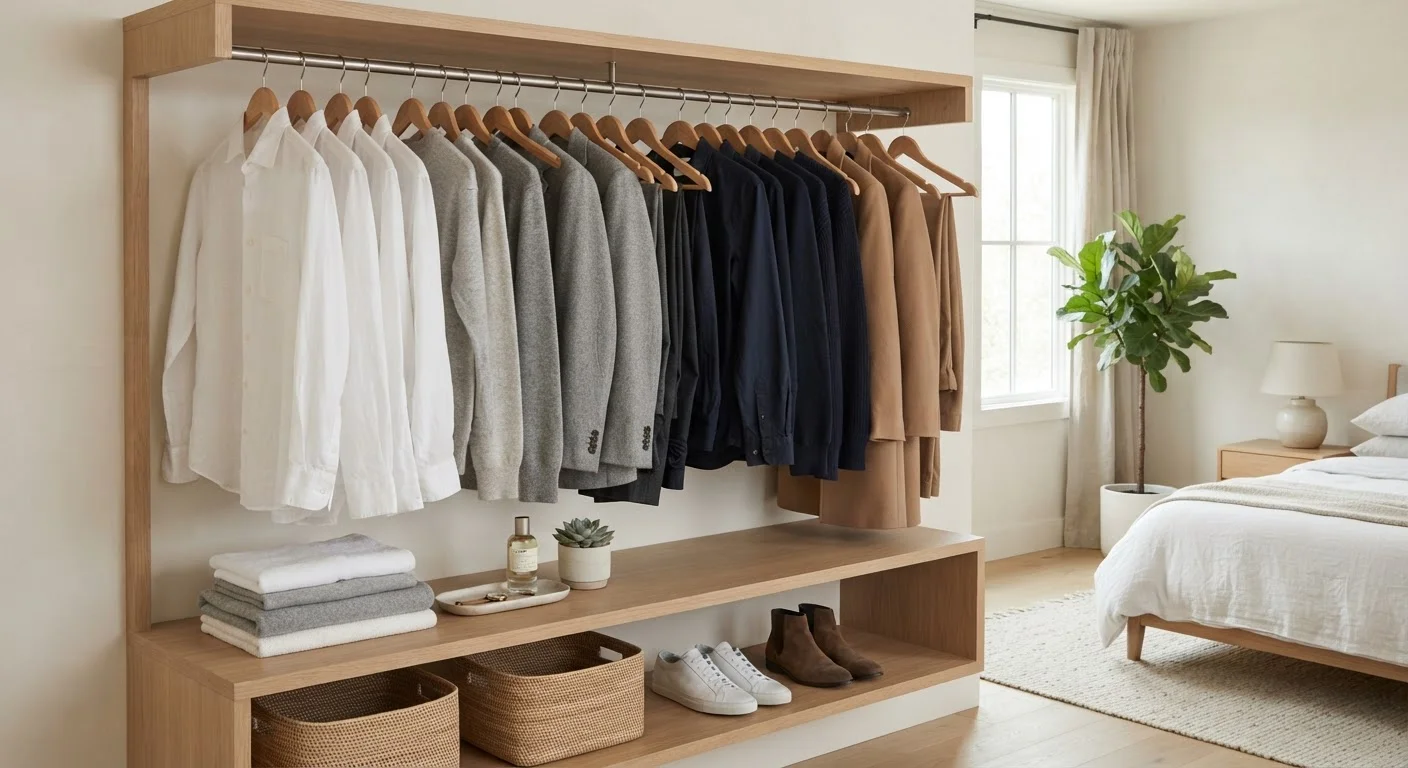
The capsule wardrobe concept — typically defined as a curated collection of around 30 to 50 versatile pieces that coordinate easily with one another — has been around since the 1970s, when London boutique owner Susie Faux popularized the term. The idea is simple: own less, but own better. Every item you keep should earn its place by being wearable in multiple contexts and combinations.
In practice, a capsule wardrobe looks different for every person. A teacher's capsule looks nothing like a freelance designer's. That flexibility is part of the appeal — and part of the complexity. Before committing to the concept, it helps to look honestly at what it delivers and where it falls short. If you're not sure where to begin, taking stock of what you already own is a practical first step before buying or purging anything.
The Real Advantages
There are legitimate reasons the capsule wardrobe has remained a compelling idea across decades of changing trends.
Reduces daily decision fatigue significantly
When every item in your closet coordinates with the others, choosing an outfit becomes faster and less stressful. Research in behavioral psychology consistently links too many choices with increased anxiety and lower satisfaction.
Encourages more intentional spending habits
A smaller, curated wardrobe naturally discourages impulse buying because new purchases must integrate with existing pieces. Over time, this can reduce wasted spending on items that rarely get worn.
Reduces closet clutter and visual noise
A pared-down wardrobe is easier to maintain, store, and navigate. Many people report feeling calmer in spaces that aren't visually cluttered — and a tidy closet can set a positive tone for the morning.
Promotes sustainable clothing consumption
Buying fewer, better-quality pieces and wearing them repeatedly is generally a lower-impact approach to fashion compared to high-volume, trend-driven purchasing.
Makes packing for travel much easier
When your pieces already mix and match at home, assembling a travel wardrobe becomes straightforward — fewer items cover more combinations, which means lighter luggage.
One underrated benefit is the financial discipline it can encourage. When your closet is intentionally small, impulse purchases have nowhere to hide — a piece either works with everything else or it doesn't earn a spot. Over time, this can shift spending habits in meaningful ways. For a broader look at how clothing volume affects your budget, see our article on spending more on fewer pieces vs. buying in volume.
Where It Falls Short
The capsule wardrobe gets a lot of glowing coverage, but the honest picture includes some real trade-offs worth weighing before you donate half your closet.
Upfront cost can be a significant barrier
Building a capsule wardrobe often involves replacing worn or ill-fitting staples with higher-quality versions, which can require a meaningful upfront investment that isn't accessible to everyone.
Doesn't suit highly varied lifestyle demands
People who move between formal professional settings, casual environments, athletic activities, and social events often genuinely need more clothing variety than a strict capsule approach provides.
Can feel creatively restrictive over time
For people whose personal style is expressive, eclectic, or trend-engaged, limiting a wardrobe to a cohesive set of neutrals can feel stifling rather than freeing.
Requires significant time and self-knowledge to build
Curating a functional capsule means knowing your lifestyle, body, and preferences well enough to make confident decisions — a process that takes time, and often a few missteps, to get right.
Online models often ignore size and body diversity
Much capsule wardrobe content online assumes easy access to straight-size, mainstream styles, which can make the framework feel exclusionary for people shopping plus sizes or with specific fit needs.
It's also worth noting that the "capsule" content you see online often skews toward a narrow aesthetic — typically minimalist, neutral, and expensive. That representation doesn't reflect the full range of body types, budgets, and personal styles that real people navigate daily. The framework is a tool, not a rulebook.
You Don't Have to Go All-In
The capsule wardrobe concept works best as a guiding principle rather than a rigid formula. You don't have to count every item or stick to a prescribed number. Many people find that applying capsule thinking to just one category — workwear, for example — delivers real benefits without requiring a total wardrobe overhaul. Start small, observe what changes, and adjust from there.
How to Know If It's Right for You
The most honest answer is: it depends on your lifestyle complexity and your style personality. If your week involves a consistent routine — office days, weekends, occasional dinners out — a capsule approach can genuinely simplify your life. If your schedule swings between a formal workplace, weekend outdoor activities, and event dressing, you may need more range than a strict capsule allows.
Rather than adopting the concept wholesale, consider using it as a lens. Start by completing a wardrobe audit to clarify what you actually wear and what's just taking up space. From there, identify your personal building blocks — the foundational pieces that show up across your real-life outfits. Our guide to capsule wardrobe building blocks can help you identify those anchors without starting from zero.
The fashion basics hub is a good place to explore more frameworks for thinking about personal style without the pressure of a single system.
~30%
Clothes in average closet never worn
Various wardrobe studies and consumer surveys suggest roughly 30% of the average person's clothing goes unworn, highlighting why a curated approach appeals to many.
35+
Average outfit decisions made daily
Estimates suggest people make dozens of small decisions before leaving the house each morning, with clothing choices contributing meaningfully to morning cognitive load.
The content on this site is for informational purposes only and is not a substitute for professional advice. Always consult a qualified professional for guidance specific to your situation.