

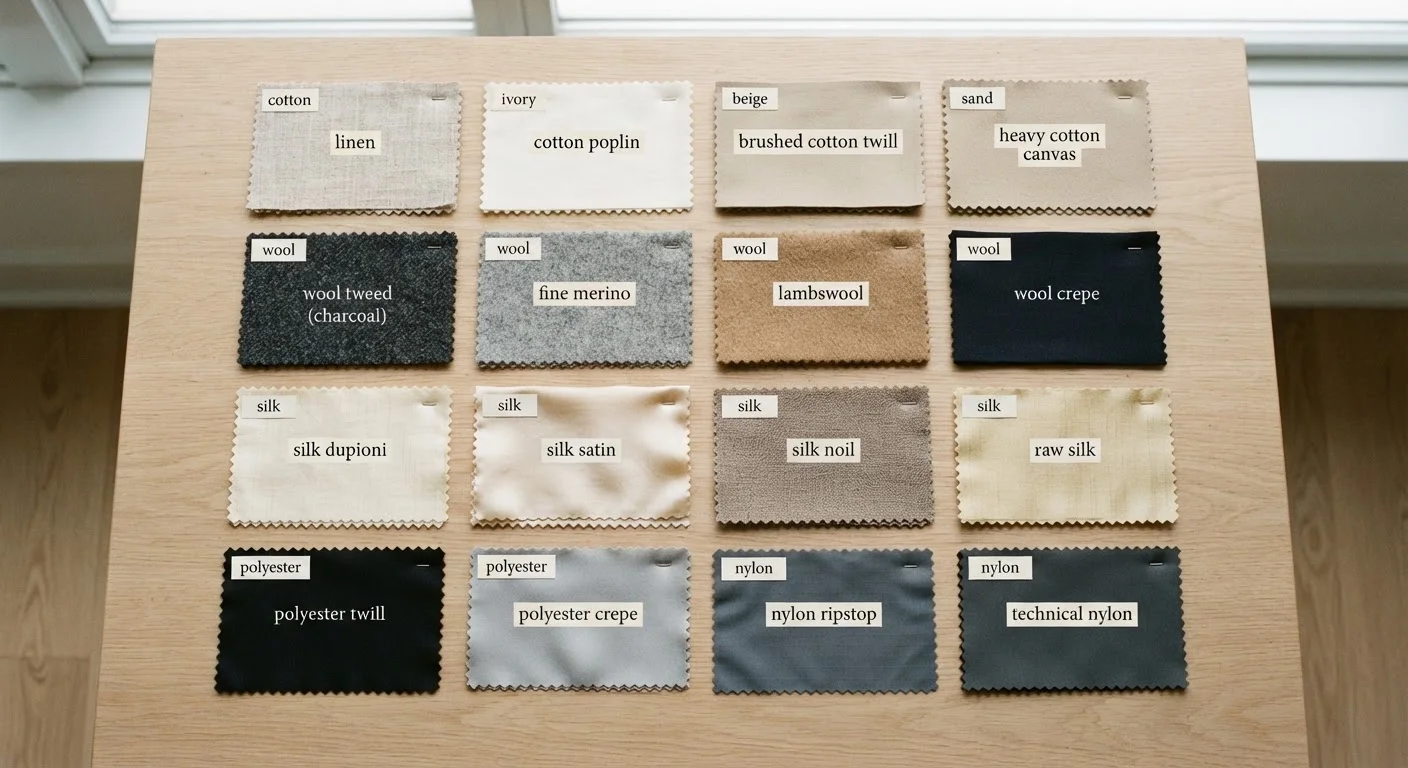
Option A
Natural Fabrics
The time-tested, breathable choice rooted in nature.
Best for: Everyday comfort, breathability, and occasion-appropriate dressing where texture and drape matter.
Option B
Synthetic Fabrics
The engineered, performance-driven modern alternative.
Best for: Active wear, budget-conscious wardrobes, and situations requiring durability or moisture management.
What Makes a Fabric 'Natural' or 'Synthetic'?
The distinction comes down to origin. Natural fabrics are derived from plant or animal sources — cotton from the cotton plant's boll, wool from sheep's fleece, silk from silkworm cocoons, and linen from flax plant fibers. These materials have been used in clothing for thousands of years and require relatively minimal processing to become wearable textiles.
Synthetic fabrics, by contrast, are manufactured through chemical processes, typically using petroleum-based compounds. Polyester, nylon, acrylic, and spandex (also called elastane) are among the most common. Developed largely in the mid-20th century, synthetics were engineered to solve specific performance problems that natural fibers couldn't always address — like durability, stretch, or resistance to moisture.
There's also a third category worth noting: semi-synthetic fabrics, such as viscose (rayon) and modal. These start with natural cellulose — usually wood pulp — but undergo significant chemical processing, placing them somewhere between both worlds in terms of properties and environmental impact.
| Criterion | Natural Fabrics | Synthetic Fabrics |
|---|---|---|
| Origin | Plant or animal sources | Petroleum-based chemical processes |
| Common examples | Cotton, wool, silk, linen | Polyester, nylon, acrylic, spandex |
| Breathability | Generally high | Lower (varies by weave/design) |
| Durability | Moderate (care-dependent) | High; resists stretching and shrinking |
| Wrinkle resistance | Low to moderate | High |
| Care requirements | More attentive care often needed | Generally machine-washable and easy-care |
| Skin comfort | Often preferred for sensitive skin | Can trap heat; performance types vary |
| Environmental footprint | Generally biodegradable | Sheds microplastics; slower to break down |
| Cost range | Varies; quality naturals can cost more | Often lower cost per garment |
Comfort, Breathability, and Skin Sensitivity
For everyday wearability, natural fabrics generally have the edge when it comes to breathability. Cotton, in particular, allows air to pass through its fibers, helping regulate body temperature in warm conditions. Linen does this even more efficiently, making it a warm-weather staple. Wool, while warm, has natural moisture-wicking properties that make it more versatile than many people expect — it can help regulate temperature in both cold and mild weather.
Synthetic fabrics can trap heat and moisture against the skin, which may lead to discomfort during long wear, particularly in warmer climates or for people with sensitive skin. However, performance synthetics — specifically engineered for athletic use — have largely overcome this limitation through moisture-wicking weave structures that actively pull sweat away from the body.
For those with skin sensitivities, natural fabrics tend to be a safer starting point, though individual reactions vary. Wool, for example, can feel scratchy to some people, and certain finishes or dyes used on any fabric type may cause irritation regardless of fiber origin. When in doubt, choosing untreated or certified organic natural fibers is generally a more skin-friendly approach.
A Note on Fabric Blends and Semi-Synthetics
Many garments are made from blended fibers — for example, a shirt labeled '60% cotton, 40% polyester' combines properties of both fabric types. Semi-synthetic fabrics like rayon (viscose) and modal are derived from natural cellulose but processed chemically, giving them a different environmental and performance profile than purely natural or purely synthetic options. Reading the fiber content label on any garment is the most reliable way to understand what you're actually wearing.
Durability, Care, and Practical Wardrobe Use
Synthetic fabrics typically outlast natural ones under everyday stress. Polyester resists stretching, shrinking, and wrinkles — it can be machine-washed and air-dried repeatedly without much deterioration. Nylon is exceptionally strong for its weight, which is why it's so common in activewear and outerwear. These properties make synthetics a practical choice for items that see heavy rotation.
Natural fabrics require more attentive care. Cotton can shrink if washed in hot water. Wool needs gentle handling to avoid felting. Silk should generally be hand-washed or dry-cleaned. That said, with proper care, high-quality natural fabrics can last for years and often age more gracefully — developing a softness and character that synthetics don't replicate.
Understanding fabric type also directly informs how you approach seasonal dressing, since layering and fabric weight choices shift significantly between warmer and cooler months. Similarly, when you're planning for a specific event, knowing your fabrics helps you dress appropriately — something covered in depth in our guide to occasion dressing.
~35%
Global fiber production share: cotton
According to industry textile data, cotton consistently accounts for roughly a third of global fiber production, making it one of the most widely used natural fabrics worldwide.
~54%
Global fiber production share: synthetics
Synthetic fibers, led by polyester, represent the majority of global fiber output, reflecting their widespread use in fast fashion, activewear, and home textiles.
500,000+
Tons of microplastics released annually from synthetic textiles
Research published in environmental science journals estimates that washing synthetic garments releases hundreds of thousands of tons of microplastic fibers into waterways each year globally.
Making Smart Fabric Choices for Your Wardrobe
Neither natural nor synthetic fabrics are universally superior — the right choice depends on your lifestyle, budget, skin type, and the occasion. A thoughtful wardrobe typically includes both: natural fabrics for everyday comfort and dressier moments, synthetics for performance wear and budget-friendly basics.
Fabric blends — like a cotton-polyester mix — are designed to offer the best of both, combining cotton's softness with polyester's durability and wrinkle resistance. These are extremely common in everyday clothing and often represent a practical middle ground.
If you're building or refreshing your wardrobe, start by reading garment labels. The fiber content, listed as a percentage breakdown, gives you an immediate sense of what to expect in terms of feel, care, and longevity. Pairing this knowledge with an understanding of dress codes like casual and smart-casual can help you put together outfits that work for real life — not just in theory.
This article is for general informational purposes only and does not constitute professional fashion, textile, or consumer advice. Individual fabric experiences may vary based on product quality, manufacturing, and personal sensitivity.
The content on this site is for informational purposes only and is not a substitute for professional advice. Always consult a qualified professional for guidance specific to your situation.