

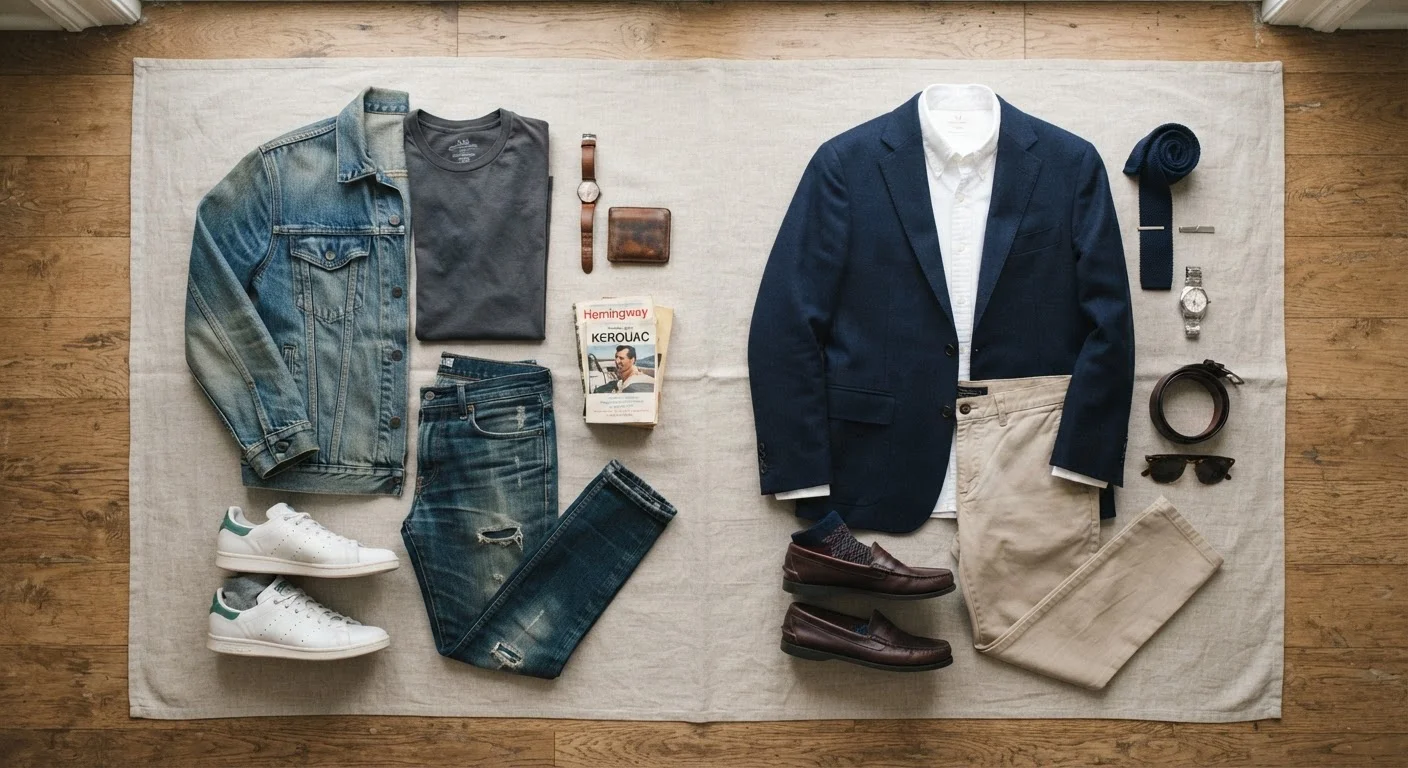
Option A
Casual Dress Code
The relaxed, no-rules everyday default.
Best for: Weekends, errands, informal hangouts, and any setting where comfort clearly takes priority over impression.
Option B
Smart-Casual Dress Code
The polished middle ground between formal and relaxed.
Best for: Dinner dates, casual Fridays, gallery openings, and events where you want to look intentional without going full formal.
What Each Dress Code Actually Means
"Casual" and "smart-casual" are two of the most misread dress codes in everyday life — and their overlap is exactly what makes them tricky. Both sit comfortably below business or formal attire, but they serve different social signals.
Casual is the absence of a strict dress requirement. It's dressing for yourself — jeans and a clean t-shirt, leggings and a cozy sweater, or a simple sundress. The priority is comfort and personal expression. There's rarely a wrong answer, as long as the setting doesn't have specific prohibitions (think "no athletic wear" signage).
Smart-casual is intentional. It asks you to look put-together without tipping into formal territory. Think of it as casual clothes elevated by fit, fabric quality, and coordination. A well-fitted pair of trousers, a tucked-in blouse, clean leather loafers — each piece signals effort. Smart-casual is not business casual (which leans more professional), but it's not "whatever's clean" either.
For a fuller breakdown of where these codes sit across the full spectrum — from black tie to beach casual — see our Dress Codes Decoded guide.
| Criterion | Casual | Smart-Casual |
|---|---|---|
| Primary goal | Comfort and self-expression | Polished without being formal |
| Fit expectation | Relaxed or personal preference | Intentional, structured fit |
| Typical fabrics | Jersey, denim, fleece, cotton | Linen, fine knits, chinos, ponte |
| Footwear | Sneakers, sandals, casual flats | Loafers, clean leather sneakers, boots |
| Accessories | Optional, minimal | One or two deliberate choices |
| Typical settings | Errands, hangouts, weekends | Dinners, work socials, dates |
| Effort signal | Low — intentionally effortless | Moderate — visibly considered |
The Details That Actually Separate Them
Once you understand the philosophy, the practical differences become clear. Here's where the real distinction lives:
Fit
This is the number-one separator. The same pair of dark jeans reads as casual in a boxy, relaxed cut and smart-casual when they're slim or straight-leg with a clean hem. Fit transforms garments. An oversized hoodie is casual; a well-structured crewneck sweater in the same outfit reads a level up.
Fabric and Finish
Casual dressing tolerates jersey, washed cotton, denim, and fleece. Smart-casual calls for slightly more structured fabrics — ponte, linen, fine knits, chinos fabric, or a cotton-linen blend. Wrinkles and pilling signal casual; pressed or structured garments signal smart. Understanding fabric choices more deeply? Our piece on natural vs. synthetic fabrics can help you shop smarter.
Footwear
Nothing shifts a look between these two codes faster than shoes. Athletic sneakers, flip-flops, and worn-in canvas shoes read as casual. Clean leather or suede sneakers, loafers, ankle boots, or block-heeled sandals push the same outfit into smart-casual territory.
Accessories
Casual dressing rarely requires deliberate accessorizing. Smart-casual benefits from one or two intentional choices — a structured bag, a simple watch, or understated jewelry. Accessorizing without overdoing it is a skill worth developing if this is where you get stuck.
#1
Factor readers misread in dress codes
Footwear is consistently cited in style surveys as the element most likely to make or break a dress-code interpretation.
2–3
Wardrobe pieces that bridge both codes
Style educators commonly note that a well-fitted dark trouser, a structured blazer, and clean leather shoes can shift any casual outfit into smart-casual territory.
Reading the Room: Context Always Wins
Dress codes don't exist in a vacuum — they exist in specific venues, cultures, and social groups. A smart-casual expectation at a tech company's team lunch might mean clean jeans and a nice top. The same code at a Manhattan rooftop event might imply trousers, a blazer, and leather shoes.
When you're uncertain, ask yourself three questions: Who is hosting? Where is the venue? What's the purpose of the event? Those answers will tell you more than any style rule. Our practical guide to occasion dressing walks through exactly this kind of contextual thinking.
It's also worth knowing that many rigid dress-code "rules" have softened significantly over the past decade. Some conventional wisdom — like hard separations between work and weekend dressing — has less practical relevance now than it once did. Which style rules are worth breaking covers which conventions still hold up and which you can safely ignore.
The goal with either dress code is the same: to feel comfortable in your own skin and appropriate to the space you're entering. Getting that balance right is what fashion basics is really about.
When the Code Isn't Specified
If an invitation simply says "casual," don't assume it means the most relaxed interpretation — that's often a social risk. Smart-casual is a reliable safe harbor when you're genuinely unsure. It's easier to remove a blazer and dress down than to wish you'd worn something more considered. When in doubt, a quick message to the host is always a graceful move.
The content on this site is for informational purposes only and is not a substitute for professional advice. Always consult a qualified professional for guidance specific to your situation.