

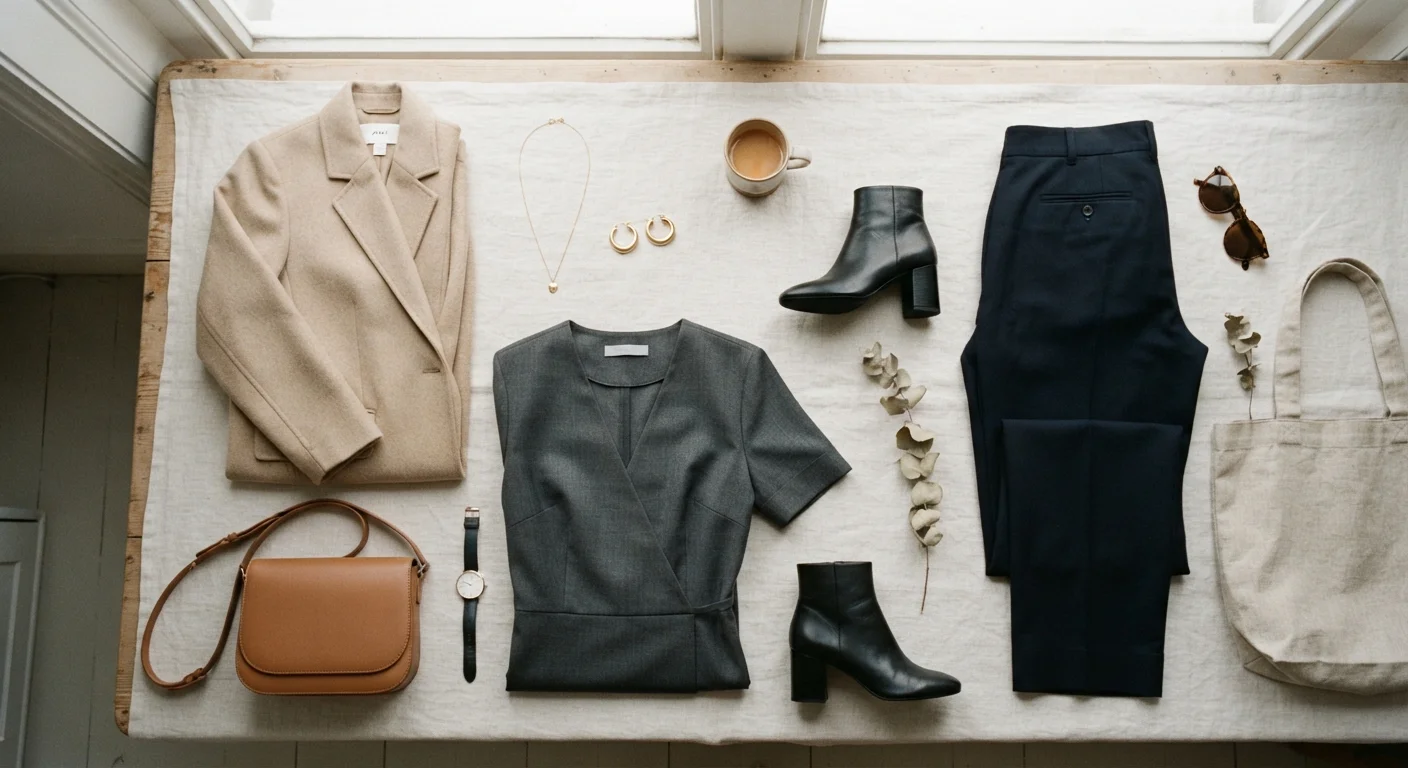
Why Dress Codes Still Matter
Dress codes have never really been about gatekeeping — they're a form of social communication. When a host specifies attire, they're signaling the tone they want to set and giving you permission to participate fully. Showing up in jeans to a black-tie dinner or over-dressed at a backyard cookout creates friction, not just for you, but for everyone around you.
Research in social psychology consistently supports the idea that clothing affects how we feel and how others perceive us. That's not about vanity — it's about being present and engaged in the context you're entering. The good news: reading the room is a learnable skill, not an innate talent. It starts with understanding the language.
Explore more foundational ideas in our Fashion Basics hub to build context around personal style and wardrobe decisions.
65%
Adults who feel more confident in well-chosen outfits
A YouGov survey found a majority of adults report a meaningful confidence boost when they feel appropriately dressed for an occasion.
3–5
Distinct dress code tiers most events fall into
Most social and professional occasions cluster into a handful of recognizable formality levels, from casual to black tie.
Decoding Common Dress Code Terms
The fashion industry and event culture use terms that sound self-explanatory but are actually layered with nuance. Here's what they genuinely mean:
- Black Tie: Floor-length gowns or elegant jumpsuits for women; tuxedos for men. This is the most formal civilian dress code.
- Black Tie Optional / Creative Black Tie: Formal, but with room for personal expression — a jewel-toned velvet blazer, a dramatic midi dress, or unexpected accessories all work.
- Cocktail Attire: Knee-length to midi dresses, tailored suits, or dressy separates. Think polished, not formal. Cocktail is the most misunderstood code — it does not mean business casual.
- Smart Casual: Elevated everyday dressing. Trousers and a refined blouse, dark jeans with a structured jacket, or a relaxed dress with clean footwear. No athleisure.
- Business Casual: Professional without being stiff — chinos, blazers, blouses, loafers. Industry-dependent: tech skews more relaxed, finance and law more conservative.
- Casual: Comfortable and personal — but not sloppy. Even a truly casual code rewards clean, well-fitting clothes over wrinkled or worn-out pieces.
When decoding 'cocktail attire,' think of the length and fabric before the silhouette — a knee-length dress in matte crepe reads cocktail; the same silhouette in jersey reads casual.
Fabric weight and finish are the fastest signals of formality, often more so than cut or color. Experienced dressers use this as a reliable shortcut.
Keep one outfit pre-planned and hanging-ready for last-minute formal invitations — it removes decision fatigue at the worst possible moment.
Decision fatigue is well-documented; having a default formal option that fits and is event-ready eliminates the scramble and the mistakes that come with it.
Occasion-by-Occasion Breakdown
Different life events carry different social weights, and your outfit should reflect that awareness.
Weddings
Follow the couple's stated code, and factor in venue and time of day. An outdoor afternoon garden wedding calls for different choices than an evening ballroom reception. General rule: avoid white, ivory, or anything that might read as bridal. For more on how the setting shapes your outfit choices, see our article on matching your outfit to the setting.
Work Events
Office parties and team dinners are still professional contexts, even when held off-site. Lean one step above your usual workwear — a polished midi dress or tailored separates typically thread the needle between festive and appropriate.
Formal Occasions
Galas, charity events, and milestone celebrations call for intentional dressing. Invest in fit above all else — a well-tailored dress or suit at any price point reads more formal than an ill-fitting designer piece.
Casual Outings
Brunches, gallery openings, and low-key gatherings invite personality. This is where smart casual lives — coordinated but unpretentious, with accessories doing the expressive work.
The One-Step-Up Rule
When you're unsure about formality, dress one step above what you think is required. Overdressing slightly signals respect for the occasion, while underdressing can feel dismissive to the host. You can always remove a blazer or simplify your accessories once you arrive and take stock of the room.
When the Invitation Says Nothing
Many invitations skip the dress code entirely. Rather than guessing blindly, use these cues:
- Venue: A rooftop bar implies different expectations than a community center or a five-star hotel ballroom.
- Time of day: Evening events almost always carry a more elevated standard than afternoon ones.
- The host's personal style: If you know them well, their taste is a reliable signal.
- Ask directly: A quick message to the host is entirely appropriate and often appreciated — it shows you care about the occasion.
When none of these cues are available, smart casual is a reliably safe default for most social occasions. You can elevate or simplify it depending on what you find when you arrive.
Avoid These Common Missteps
Don't conflate 'casual' with 'anything goes' — even relaxed dress codes reward effort. Similarly, avoid over-accessorizing when dressing up in unfamiliar territory; it can tip an otherwise balanced look into overdone territory. When in real doubt about a specific cultural or religious ceremony's dress expectations, research or ask rather than assume your default is appropriate.
Building a Capsule for Every Occasion
Rather than scrambling before each event, a small set of anchor pieces covers most occasion categories with minimal effort. Consider anchoring your wardrobe around:
- A knee-to-midi length dress in a neutral or versatile color that can be styled up or down
- Tailored trousers that pair with both casual blouses and structured blazers
- A blazer or structured jacket that transitions from smart casual to business events
- One formal option — a gown, a suit, or an elegant jumpsuit — for genuinely dressy occasions
- Clean, simple footwear in at least two formality levels (think loafers or block heels alongside casual sneakers)
Dressing these pieces seasonally extends their range considerably. Our guide on adapting your wardrobe year-round covers layering and fabric strategies that keep these anchors working across weather conditions. And when it comes to finishing touches, accessorizing without overdoing it ensures your accessories elevate rather than overwhelm.
“Dressing appropriately for an occasion isn't about conformity — it's about showing that you understand the context and respect the people in it. That awareness is its own kind of style.”
— Tim Gunn, Fashion educator and television personality
This article is for informational and style-guidance purposes only. Individual fit and occasion norms vary — use your own judgment and consult the event host when in doubt.
The content on this site is for informational purposes only and is not a substitute for professional advice. Always consult a qualified professional for guidance specific to your situation.