

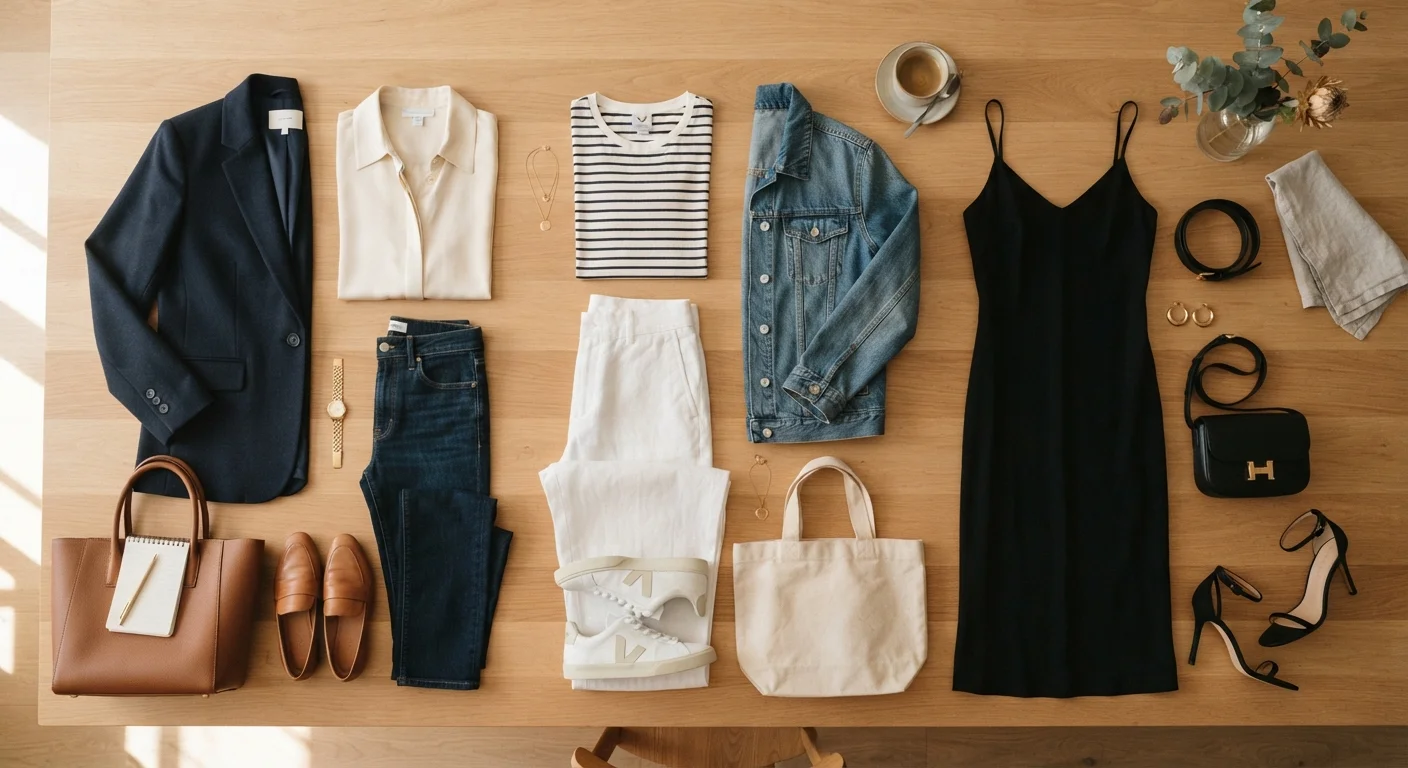
Why Occasion Dressing Feels So Hard
Dress codes have never been more fluid — and that's both liberating and genuinely confusing. "Smart casual" and "business casual" often mean completely different things depending on who's writing the invitation. The result? Many of us default to either overdressing out of anxiety or underdressing out of rebellion, rarely landing where we actually wanted to be.
The good news is that occasion dressing isn't about following rigid rules. It's about reading context clues — the venue, the host, the time of day — and making a few deliberate choices that show you understood the room. Once you internalize this framework, getting dressed for almost any event becomes far more intuitive.
For a deeper look at two of the most misunderstood dress codes, check out our guide on casual vs. smart-casual dressing. And if you want to understand how occasion codes work across event types like weddings and work functions, reading the room for any occasion is a practical companion read.
What you will need
How to Match Your Outfit to Any Setting
Follow these steps each time you're preparing for an event or outing. With practice, the process takes only a few minutes — and the confidence payoff is immediate.
Identify the Occasion Category
Before you open your closet, place the event into one of four broad categories: formal/black-tie, business or professional, smart-casual, or casual. Most invitations, venues, and social contexts fall clearly into one of these. A courthouse visit is professional; a backyard birthday is casual; a firm's holiday party is often smart-casual.
Research the Venue and Host
The same event type can carry different expectations depending on location and culture. A wedding in a barn has different visual norms than a wedding in a cathedral, even if both say "semi-formal." When possible, check the venue's website or social media for visual cues, or ask the host directly — there's no social penalty for a brief, polite inquiry.
Apply the One-Level-Up Rule When Unsure
If you're genuinely uncertain between two levels — casual vs. smart-casual, or smart-casual vs. business — choose the slightly elevated option. Arriving slightly overdressed signals respect and care. Arriving underdressed can feel uncomfortable to navigate once you're already there. A pair of clean, dark trousers and a neat top will almost never feel out of place, even at casual gatherings.
Choose Your Base Garment First
Pick the single most important piece for the occasion — usually your bottom half for professional settings, or a dress or top for social events — and build outward from there. Selecting a foundation garment that clearly fits the occasion level prevents the common mistake of mixing mismatched formality signals (e.g., a tailored blazer over overly distressed denim for a business meeting).
Calibrate With Accessories and Fabric
Once your base is set, use accessories and fabric texture to fine-tune the formality level. Structured leather shoes and a simple metal watch dress up a smart-casual outfit. Swapping those for white sneakers and a woven canvas bag dresses it down. Similarly, a silk blouse raises the register of any bottom, while a cotton slub tee lowers it. For color pairing guidance as you finalize the look, color coordination principles offer a clear, no-overthinking framework.
Do a Final Comfort and Practicality Check
An outfit that looks perfect in your mirror but leaves you tugging, overheating, or struggling to walk will undermine your confidence at the actual event. Sit down, move your arms, and consider the weather. If the event involves standing for hours, reconsider stilettos. If it's outdoors in summer, consider breathable fabrics. For seasonal outfit strategy, our guide on styling approaches for different seasons covers fabric and layering decisions that keep you comfortable year-round.
Start With a "Three-Occasion" Capsule
If you want to simplify occasion dressing long-term, identify the three settings you dress for most often and make sure you have at least one reliable outfit for each. Having a proven go-to for work, casual weekends, and semi-formal events removes the last-minute scramble entirely. You can always expand from there as your social calendar evolves.
Building a Wardrobe That Works Across Occasions
You don't need a separate wardrobe for every occasion category. The key is identifying pieces that move between settings with small adjustments. A well-cut blazer, for example, layers over a casual T-shirt for smart-casual and over a button-down for business. Dark, straight-leg trousers read professional at work and refined at dinner. A wrap dress navigates cocktail parties, casual brunches, and job interviews depending on heels versus flats and jewelry choices.
Fit is the great equalizer here. Clothes that fit your actual body — not the body you're dressing for — always look more intentional than expensive items that gape or bunch. If something you own isn't sitting right, our guide on common fit fixes that transform outfits covers the most impactful adjustments you can make.
Fabric is another lever worth pulling. Structured wovens like cotton poplin or ponte read more formal; relaxed jersey and linen read casual. Understanding those signals means you can dress the same silhouette up or down intentionally. See our breakdown of natural vs. synthetic fabrics for a practical overview. And once your outfit foundation is solid, the right accessories do the fine-tuning — our piece on accessorizing without overdoing it shows how to balance them without competing with the look itself.
Don't Let "Rewearing" Anxiety Derail You
Repeating outfits — especially to different events with different crowds — is entirely normal and financially sensible. Style confidence comes from how you wear something, not how rarely you wear it. If an outfit works for the occasion, wear it.
The content on this site is for informational purposes only and is not a substitute for professional advice. Always consult a qualified professional for guidance specific to your situation.