

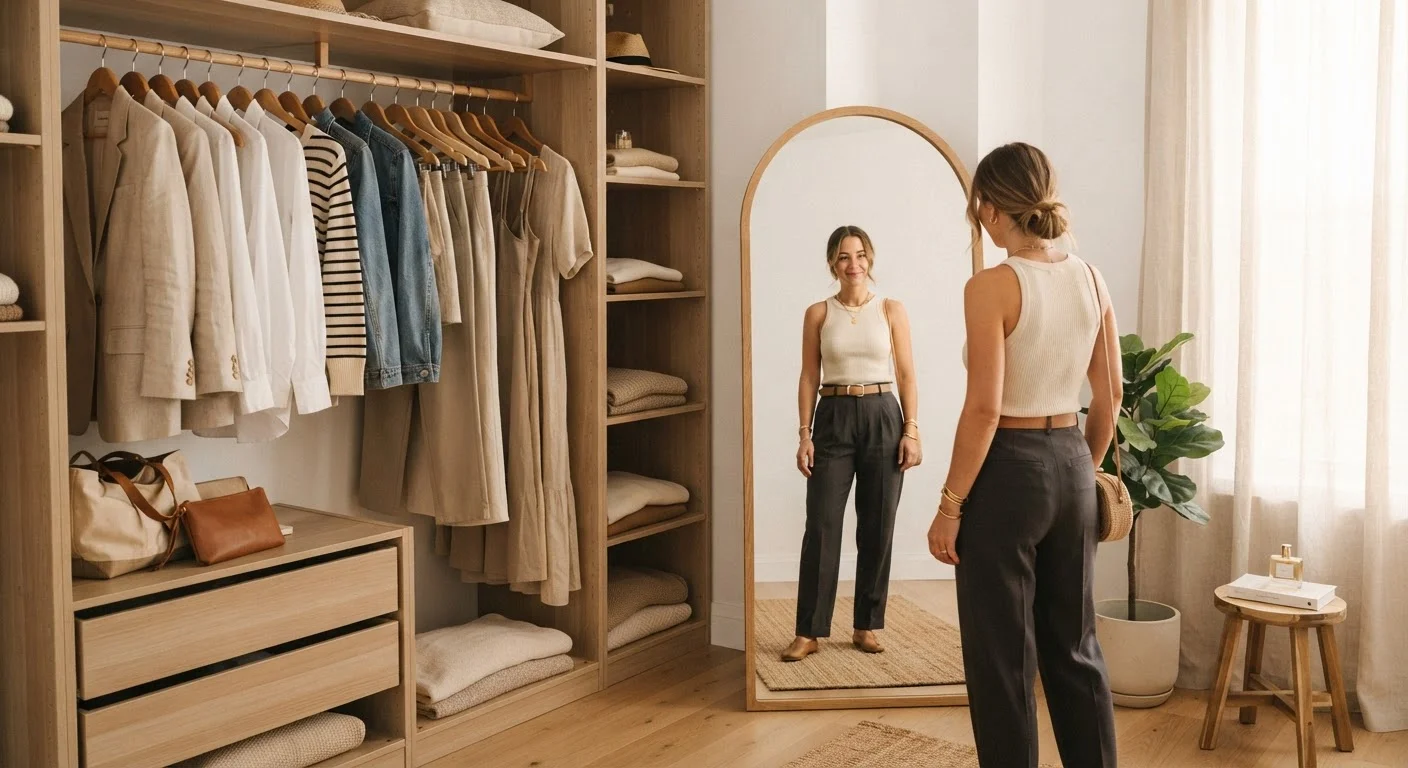
The Real Reason Outfits Feel Off
You've stood in front of the mirror thinking an outfit just doesn't work — but couldn't explain why. The clothes are clean, the colors aren't clashing, yet something feels wrong. In most cases, the culprit is fit, and more specifically, an imbalance in proportion and structure. Understanding this is the first step to dressing in a way that genuinely feels good.
Proportion and silhouette are the invisible architecture of every outfit. When they're off — even slightly — the result reads as sloppy or unresolved, regardless of how trendy or expensive the individual pieces are. The good news? Most proportion problems have straightforward fixes that don't require a shopping trip.
85%
Shoppers who report fit as top purchase driver
Consumer research from Cotton Incorporated's Lifestyle Monitor consistently finds that fit ranks as the number-one factor in clothing satisfaction across age groups.
1 in 3
Online clothing purchases returned due to poor fit
Industry return data indicates that fit-related issues account for roughly one in three online fashion returns, making it the leading cause of post-purchase dissatisfaction.
Common Fit Mistakes and How to Correct Them
The mistakes below show up in closets across every style preference and budget. Recognizing them is more than half the battle.
Wearing clothes that are too large because they feel more comfortable.
Why it happens: Many people equate loose clothing with comfort or assume bigger equals more flattering, especially when feeling self-conscious about their body.
Ignoring proportion when mixing loose and fitted pieces.
Why it happens: Without a framework for balancing volume, it's easy to pair an oversized top with wide-leg pants and end up with a shapeless silhouette.
Skipping the waistline entirely in every outfit.
Why it happens: Untucked tops and unbelted layers feel easy and casual, so many people default to this look daily without realizing it flattens their silhouette.
Mixing fabric weights and structures in ways that clash visually.
Why it happens: Shoppers often focus on color coordination but overlook how a crisp structured blazer worn over a flimsy, drapey top creates an incongruous look.
Assuming tailoring is only for formal wear or expensive clothing.
Why it happens: Many people believe alterations cost more than the garment is worth, or that only suits need a tailor.
For a deeper look at how fit applies across different garment types, why fit matters more than the label breaks down what good fit actually looks like from shirts to trousers.
Fit Applies to Every Body Type
There is no single 'ideal' body that clothing is designed for, but there is a fit principle that applies universally: clothes should follow your shape without straining or drowning it. Seeking out brands that offer extended sizing, petite cuts, or tall options isn't a compromise — it's smart dressing. A tailor can bridge remaining gaps affordably.
Finishing an Outfit With Intention
Once fit fundamentals are in place, accessories and occasion-awareness take an outfit the rest of the way. A well-fitted look that ignores context — wearing ultra-relaxed proportions to a formal setting, for example — still falls flat. Occasion dressing walks through how to read environments and dress accordingly without overthinking every choice.
Similarly, accessories do more structural work than most people credit. A belt defines a waist; a scarf shifts visual weight upward; the right bag balances a proportion. Explore how accessories function as outfit architecture to see just how transformative the right finishing touches can be.
Don't Rely on Size Labels Alone
Sizing varies significantly across brands and countries, so a number or letter on a tag is rarely a reliable guide. Buying strictly by label size — rather than by actual measurements — is one of the most common reasons clothes fit poorly. Always check a brand's specific size chart and measure yourself before purchasing, especially online.
Building wardrobe confidence is an ongoing process — not a destination. Start by identifying the one fit issue that bothers you most, fix it, and notice how much more intentional your outfits begin to feel. That momentum is real, and it compounds. You can also explore the full fashion basics hub for more foundational guidance on building a wardrobe that actually works for your life.
The content on this site is for informational purposes only and is not a substitute for professional advice. Always consult a qualified professional for guidance specific to your situation.