

Why Dress Codes Still Matter
Few things create more anxiety than an invitation that says "cocktail attire" or "festive dress" — especially when the stakes feel high. Dress codes are shorthand that hosts use to set the tone for an event, but the terminology has evolved unevenly over decades, leaving most people guessing. Understanding the spectrum from the most formal to the most relaxed makes the whole exercise much less stressful.
This guide breaks down the major dress codes used in the U.S. today, what each one signals, and — just as importantly — the common misreads to avoid. For a broader look at how setting shapes outfit choices, see our occasion dressing primer.
| Most Formal Dress Code | White Tie |
| Most Commonly Misread Code | Smart Casual |
| Black Tie: Standard Attire | Tuxedo or floor-length gown |
| Business Casual: Key Exclusions | Ties not required; jeans and athletic wear generally out |
| Cocktail Attire: Typical Hemline | Knee to midi length |
| Dress Code Spectrum | White Tie → Black Tie → Cocktail → Business Formal → Business Casual → Smart Casual → Casual |
The Formal End of the Spectrum
White Tie is the most formal dress code in existence and is now extremely rare outside state dinners and certain galas. For those assigned male at birth, it means a black tailcoat, matching trousers with satin stripes, a white piqué waistcoat, and a white bow tie. For those assigned female at birth, a full-length ball gown is traditional. If you receive a white-tie invitation, treat it as a costume with very little room for interpretation.
Black Tie is the dress code most people encounter at weddings, charity events, and formal dinners. A tuxedo — typically black or midnight navy — with a black bow tie is standard for tuxedo wearers. A floor-length gown, a sophisticated midi dress, or an elegant jumpsuit in luxe fabric all work for gown wearers. The most common mistake: treating black tie as an excuse for any dark suit. A well-pressed suit is acceptable only when the invitation reads Black Tie Optional, which signals the host's preference for formal dress while acknowledging not everyone owns a tux.
Cocktail Attire sits one step below black tie. Think knee-to-midi length dresses, tailored two-piece suits, or dressy separates. For those in suits, a well-fitted dark suit with a tie (not a bow tie) is the target. Cocktail attire is versatile but not casual — athleisure, jeans, and open-toe sandals are generally out of place.
Black Tie Optional
A dress code that requests formal attire but acknowledges that a tuxedo is not mandatory. A dark, well-fitted suit with a tie is generally acceptable in place of a tuxedo.
Cocktail Attire
A semi-formal dress code calling for knee-to-midi length dresses or tailored suits. It sits between business formal and black tie on the formality spectrum.
Smart Casual
A flexible, mid-range dress code that blends relaxed pieces with polished ones. The key is that everything should appear intentional, clean, and well-fitting.
Business Casual
A professional but relaxed dress code common in office environments. It typically excludes ties and formal suits while still requiring neat, presentable clothing.
White Tie
The most formal Western dress code, reserved for very rare occasions such as state dinners. It requires a tailcoat and white bow tie for those in tuxedo dress, and a ball gown for others.
Resort Casual
A warm-weather-appropriate dress code common at destination events. It allows lightweight fabrics, linen, and relaxed silhouettes while still expecting a put-together appearance.
The Middle Ground: Business and Semi-Formal
Business Formal applies in conservative professional settings — law firms, finance, certain corporate headquarters. Dark suits (navy, charcoal, or black), collared dress shirts, ties, and closed-toe leather shoes cover the suit-wearing end. Tailored trousers or skirts, blazers, blouses, and low heels or polished flats work for the non-suit side.
Business Casual is where confusion really sets in. The short version: remove the tie requirement, allow some color and pattern, but keep everything neat, pressed, and intentional. Chinos, polo shirts, blouses, and loafers are solidly in-bounds. Ripped denim, graphic tees, and flip-flops are firmly out. For a deep dive into where this blurry line sits, our guide on smart casual vs. casual is worth bookmarking.
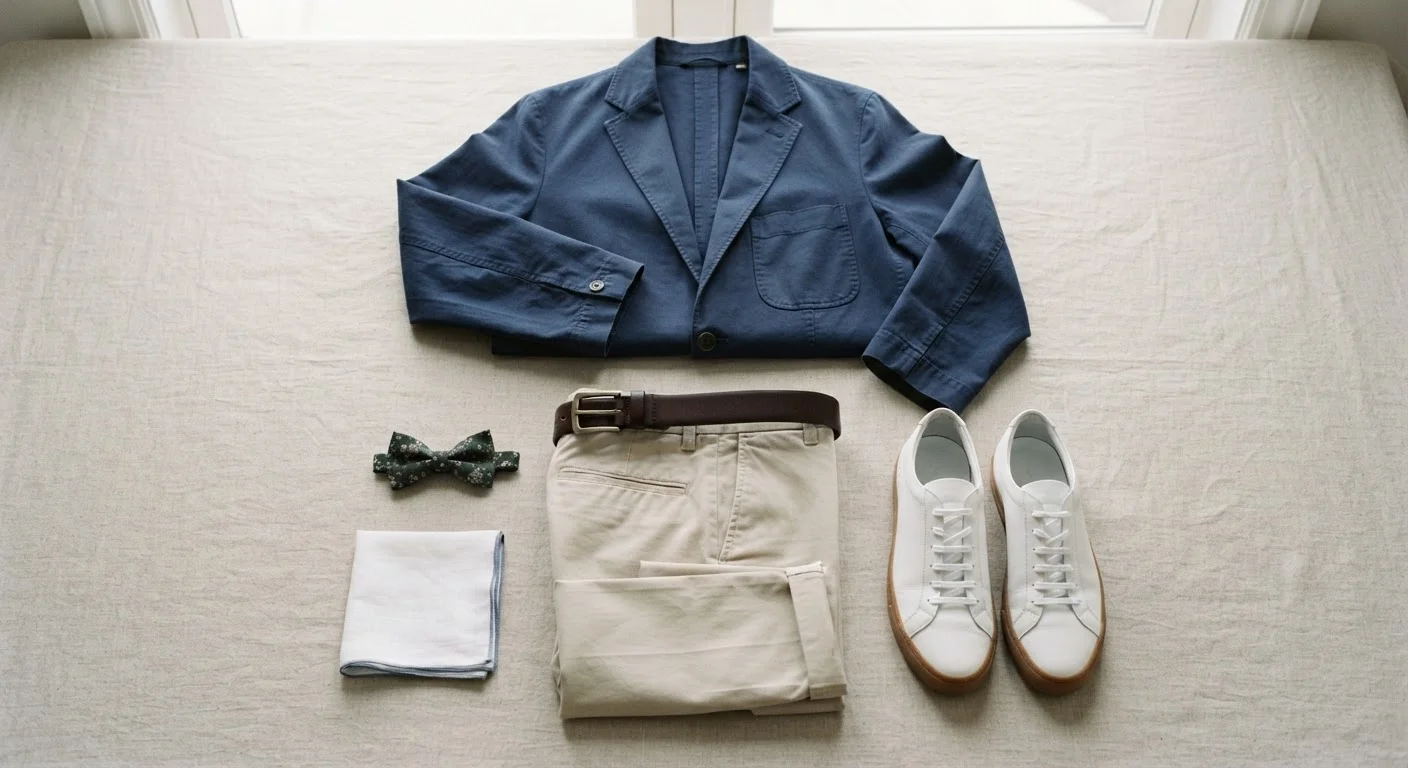
Smart Casual is arguably the trickiest code because it is intentionally flexible. The goal is polished but relaxed — a dark-wash jean paired with a structured blazer and clean sneakers, for example, hits the mark. Clean, well-fitting pieces in good condition are the real standard.
When the Invite Is Vague
If an invitation lists a dress code you don't recognize — like 'Garden Party Chic' or 'Festive Attire' — a quick message to the host is always appropriate and appreciated. When in doubt, dressing one level more formal than you think is necessary is a lower-risk choice than underdressing. Color coordination can also help elevate an outfit when you're unsure; see our guide on color coordination for clothing for accessible tips.
Casual — and What It Doesn't Mean
Casual on an invitation does not mean anything goes. It signals comfort and informality, but hosts still expect you to look put-together. Think clean, well-fitting jeans or trousers, a neat top or casual button-down, and simple footwear. Wrinkled, torn, or stained clothing is still off the mark regardless of the dress code.
Resort Casual (also called Island Casual or Beach Formal in some invitations) is common at destination events. Linen trousers, sundresses, and lightweight fabric in warm tones or prints all work. Shorts may be appropriate depending on the event, but keep them tailored rather than athletic.
Still puzzling over how to apply these codes to real-life scenarios like job interviews or weekend gatherings? Reading the room for any occasion walks through exactly that. And if you want to understand which style rules carry real logic versus which are arbitrary, check out the style rules worth breaking.
The content on this site is for informational purposes only and is not a substitute for professional advice. Always consult a qualified professional for guidance specific to your situation.