

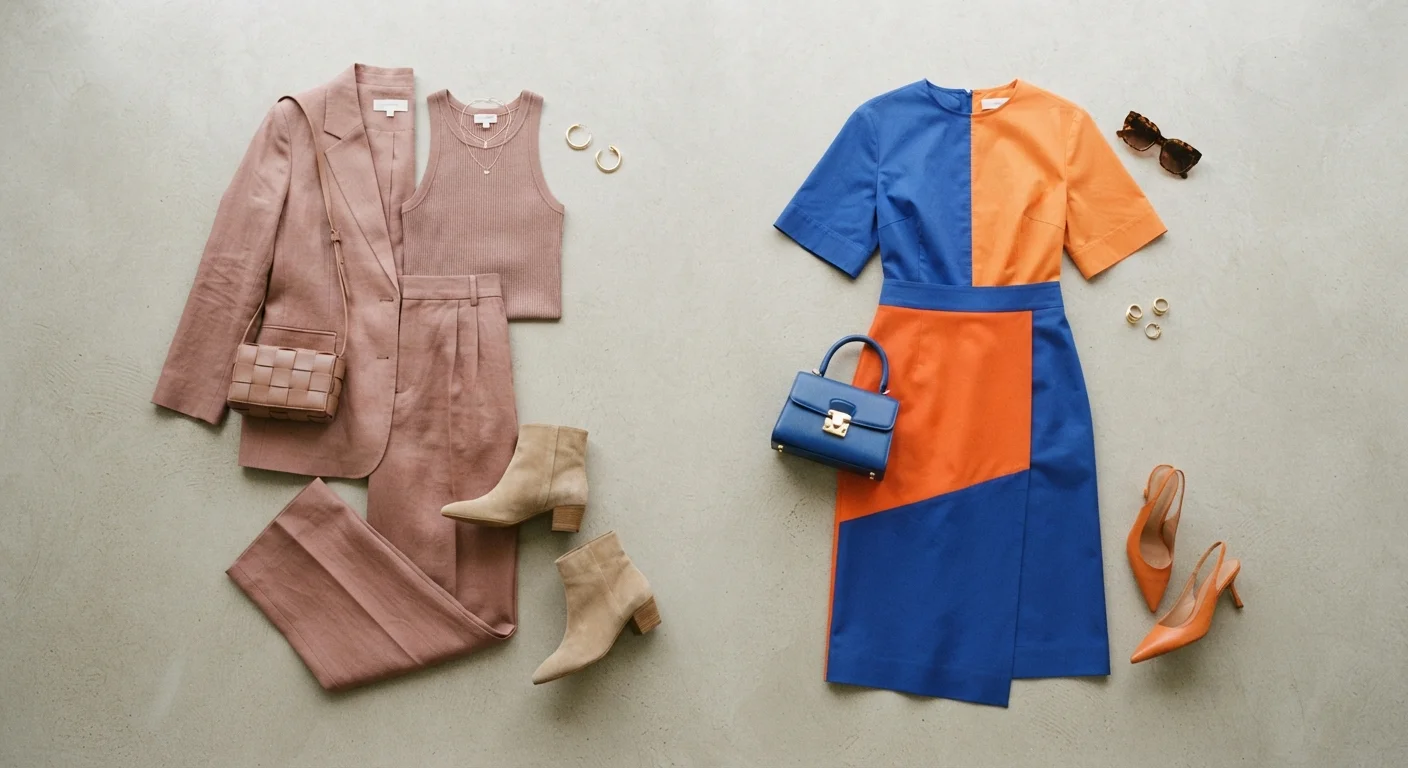
Option A
Monochromatic Dressing
The sleek, harmonious approach to single-tone style.
Best for: Anyone who wants a polished, elongating effect with minimal effort and maximum versatility.
Option B
Color Blocking
The bold, intentional pairing of contrasting solid hues.
Best for: Those who want to make a visual statement, play with proportion, or inject personality into everyday dressing.
Understanding the Two Approaches
Color is one of the most powerful tools in a wardrobe — it shapes mood, perception, and how a silhouette reads. Two of the most recognizable strategies for working with color are monochromatic dressing and color blocking, and while they sit on opposite ends of the contrast spectrum, both are grounded in clear visual logic.
Monochromatic dressing means building an outfit from shades, tints, and tones within a single color family. Think a camel trench over a cream blouse tucked into tan trousers — none of the pieces are identical, but they all live in the same warm neutral territory. The result is a continuous flow of color that the eye reads as one unified look, which naturally elongates the body and minimizes visual interruption.
Color blocking takes the opposite approach: it pairs two or more distinct, contrasting solid colors in clearly defined sections. A cobalt blazer over white trousers with an orange bag is color blocking. The key is that each color occupies its own deliberate zone — there's no blending or gradation. The contrast creates energy and draws the eye through the outfit in a specific sequence.
Both strategies are explored within the broader world of fashion basics, and understanding how each one works helps you choose the right tool for any given day or occasion.
| Criterion | Monochromatic Dressing | Color Blocking |
|---|---|---|
| Color range | Tones/shades of one color family | Two or more contrasting solid hues |
| Visual effect | Seamless, elongating, unified | Bold, defined, high-contrast |
| Mood conveyed | Polished, refined, effortless | Confident, expressive, fashion-forward |
| Silhouette impact | Minimizes breaks, lengthens frame | Creates zones, directs the eye |
| Best occasion fit | Professional, formal, everyday polish | Casual, creative, social events |
| Styling complexity | Low — tonal pieces naturally coordinate | Moderate — requires deliberate hue pairing |
| Wardrobe versatility | High — pieces mix easily within family | Depends on how bold the color choices are |
How Each Approach Shapes Proportion and Silhouette
One of the most practical reasons to choose one approach over the other has nothing to do with trend and everything to do with how you want your body to read in a space.
Monochromatic looks minimize the visual breaks across your frame, which creates a lengthening effect. This is particularly useful for petite figures, since uninterrupted color prevents the eye from stopping at a waistband, hem, or shoulder. For taller or more angular body types, a tonal look can feel effortlessly sleek without demanding extra layering to add dimension.
Color blocking, by contrast, uses those visual breaks deliberately. A contrasting hem, waistband, or shoulder panel tells the eye exactly where to go — which means thoughtful placement can emphasize or de-emphasize different zones. For example, a bold-colored skirt paired with a quieter top draws focus downward; a bright top over neutral trousers lifts attention upward. The technique gives wearers a way to direct how their proportions are perceived, which can be genuinely empowering across all body types.
62%
Shoppers who say color influences their purchase decision
Research published in the journal Colour: Design & Creativity indicates color is among the top factors consumers consider when evaluating clothing.
90 sec
Time for first impression of an outfit to form
Studies on visual perception suggest that people form a primary judgment of an outfit's overall look within roughly 90 seconds of seeing it.
For more guidance on adapting these principles across different seasons and layering scenarios, see our article on seasonal styling approaches.
Reading the Room: Occasion and Context
Neither approach is universally "right" — context does a lot of the heavy lifting when it comes to which one serves you best.
Monochromatic dressing tends to read as composed and polished, which makes it a natural fit for professional settings, formal occasions, or any environment where you want to project quiet confidence without visual distraction. A head-to-toe navy look, for instance, signals intention without requiring explanation.
Color blocking skews more expressive and informal, though that's not a limitation — it simply means the setting matters more. Creative industries, casual social gatherings, and fashion-forward events are natural homes for bold contrast. A well-executed color-block outfit can also work in business-casual environments when the hues are sophisticated (think burgundy and forest green) rather than high-saturation primaries.
A Note on Undertones and Color Harmony
Whether you're going monochromatic or blocking colors, undertones matter. Warm-undertone hues (golden yellows, burnt oranges, warm reds) tend to sit naturally together, as do cool-undertone hues (icy blues, jewel tones, cool pinks). Mixing warm and cool undertones without intention can make even a well-planned outfit feel slightly off. When in doubt, stick to hues from the same temperature family as a starting point.
Our piece on occasion dressing walks through how to read dress code cues and map your style choices to the setting more precisely.
Accessories play a significant supporting role in both approaches. With monochromatic looks, a tonal accessory reinforces the flow, while a contrasting bag or shoe introduces just enough interest. With color blocking, accessories can either echo one of the existing hues or act as a neutral bridge. For a deeper dive into that balance, see our guide on accessorizing without overdoing it.
The content on this site is for informational purposes only and is not a substitute for professional advice. Always consult a qualified professional for guidance specific to your situation.