

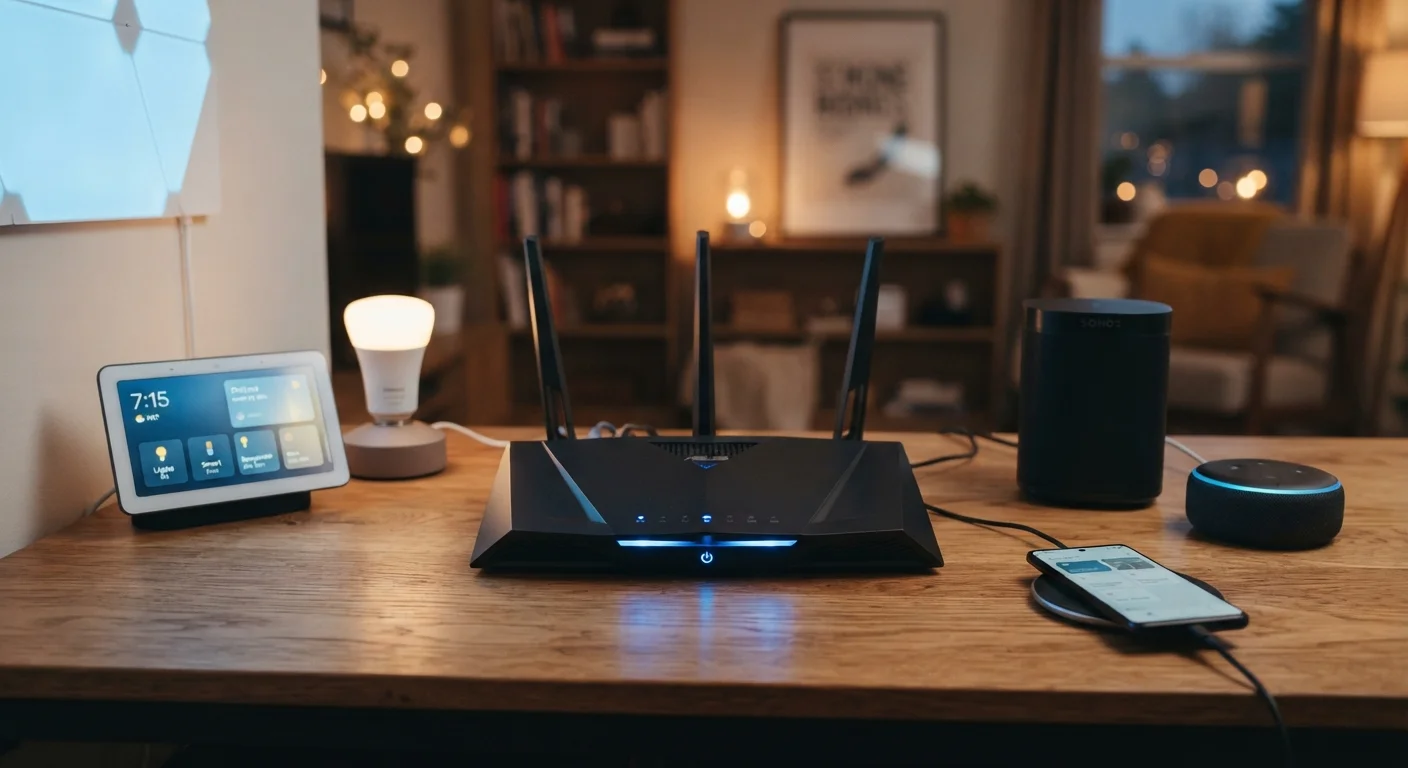
Why Home Wi-Fi Security Deserves Your Attention
Your home Wi-Fi network is the gateway through which every device in your house — phones, laptops, smart TVs, security cameras, and more — connects to the internet. An unsecured or poorly configured network can allow outsiders to access your bandwidth, intercept unencrypted data, or potentially reach devices you'd rather keep private.
The good news is that meaningful protection doesn't require networking expertise. A handful of straightforward changes to your router's settings dramatically reduce your exposure. For a broader look at building resilient online habits, see our guide on strong digital security habits — the principles there complement everything in this article. You can also explore our Digital Privacy & Safety hub for more practical guidance.
83%
Households with at least one Wi-Fi connected device
According to Pew Research Center data, the vast majority of U.S. households rely on home wireless networks daily.
70%+
Routers still using default credentials
Security researchers have consistently found that a large share of consumer routers remain on factory-default login credentials, according to multiple network security studies.
The Core Practices Every Household Should Follow
Most home router vulnerabilities trace back to a small set of overlooked defaults. The practices below address the most common and impactful issues — none require technical background, and most can be completed in under 30 minutes.
Check Your Router's Admin Panel
Every router has a web-based admin interface, typically accessible by typing an IP address like 192.168.1.1 or 192.168.0.1 into your browser's address bar. Your router's label or manual will confirm the exact address. This is where you'll make most of the security changes described in this article. If you've never accessed it, your router's default credentials are usually printed on the device itself.
Change your router's default admin username and password immediately.
Manufacturers ship routers with generic credentials that are publicly documented and trivially easy for anyone to look up. Leaving them unchanged gives any device on your network a direct path to your router's full controls. A strong, unique admin password is your first and most important line of defense.
Enable WPA3 encryption, or WPA2 if your router doesn't support WPA3.
Wi-Fi encryption determines how securely data travels between your devices and router. Older standards like WEP and WPA have known weaknesses that can be exploited with freely available tools. WPA2 remains widely secure for most households, while WPA3 offers meaningful improvements for newer hardware.
Create a separate guest network for visitors and smart home devices.
Smart TVs, thermostats, and door cameras often have weaker security than your laptop or phone. Keeping them on an isolated guest network means that if one device is compromised, it can't easily reach your personal files, banking sessions, or other sensitive traffic. The same logic applies when friends and family visit.
Keep your router's firmware updated.
Router manufacturers regularly release firmware updates that patch discovered security vulnerabilities. An unpatched router is an open invitation to exploits that have already been publicly disclosed. Many routers now support automatic updates, which removes the need to remember manual checks.
Use a strong, unique password for your Wi-Fi network itself.
Your Wi-Fi password (the one guests type to join) is separate from your admin password and equally important. Short or common passwords can be cracked through brute-force attempts. A passphrase of 16 or more mixed characters that you don't reuse elsewhere dramatically raises the difficulty for unauthorized access.
Disable remote management unless you specifically need it.
Remote management allows your router to be accessed from outside your home network. While useful for IT professionals managing multiple locations, it's an unnecessary exposure for most households. When enabled with weak credentials, it can allow attackers anywhere on the internet to attempt to log in.
Quick Actions You Can Take Today
If the full list feels like a lot to tackle at once, start with these high-impact steps that take only a few minutes each. Small changes compound over time into a meaningfully more secure setup.
Use a Password Manager for Network Credentials
Keeping track of a strong admin password and a separate Wi-Fi passphrase is easier with a password manager. These tools store your credentials securely and generate strong, random passwords on demand. You only need to remember one master password to access the rest — a practical habit that supports your broader digital security.
Understanding the Limits of Common Myths
A few popular pieces of advice deserve clarification. Hiding your network name (SSID) is often recommended, but provides very little real protection — any basic network scanner reveals hidden networks immediately. It adds inconvenience without meaningful security. Focus your energy on strong authentication and encryption instead.
MAC address filtering — which restricts which devices can join based on a hardware identifier — is similarly easy to bypass for a determined attacker and cumbersome to maintain as you add devices. It's not a reliable security layer on its own.
“Security is always excessive until it's not enough. The practices that feel unnecessary are exactly the ones that matter when something goes wrong.”
— Roberta Bragg, Author and information security professional
If you're interested in how your network's physical setup affects performance and coverage, our article on why Wi-Fi works in some rooms but not others explains the structural factors at play. And if you're considering a larger network upgrade, see when mesh Wi-Fi systems help and when they're overkill for context on whether a more complex setup is warranted.
For situations where wireless security matters beyond your own home, our article on Wi-Fi security at home and in public outlines how risks shift when you're away from your own network.
The content on this site is for informational purposes only and is not a substitute for professional advice. Always consult a qualified professional for guidance specific to your situation.