

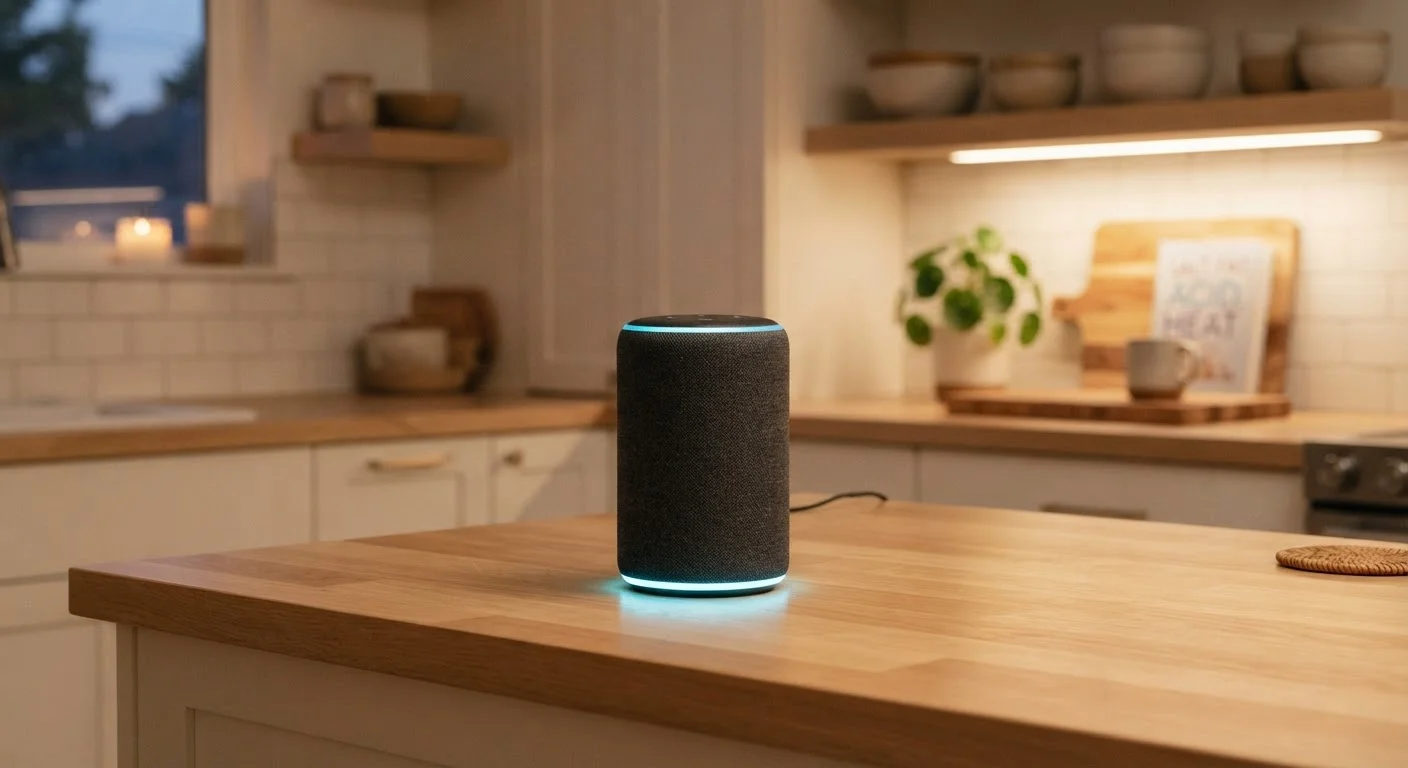
More Than a Wireless Speaker With a Microphone
The phrase "smart speaker" undersells what these devices actually are. At their core, they are always-on, voice-activated computing terminals that happen to include audio hardware. The speaker component handles playback; the intelligence lives in software running partly on the device and largely in the cloud.
When you speak a command, the device detects its wake word — a short phrase like "Hey" followed by the assistant's name — and begins recording a short audio clip. That clip is transmitted over your home Wi-Fi network to the manufacturer's servers, where natural language processing interprets your intent, fetches a response, and sends it back within seconds. The whole exchange typically completes faster than it takes to type a search query.
This architecture explains why a reliable broadband connection matters. Without it, even simple tasks like checking the weather or setting a timer may fail. If you're still exploring the broader landscape of connected home technology, this overview of smart home setup covers the foundational concepts worth understanding first.
Smart Home Control: The Hub Function
One of the most practical — and often underused — capabilities of a smart speaker is acting as a voice-activated control center for other devices in the home. Compatible smart bulbs, thermostats, door locks, plugs, and cameras can all be addressed by voice once they're linked through the speaker's companion app.
Commands can target individual devices ("dim the bedroom light to 40%") or groups ("turn off all the downstairs lights"). Most platforms also support third-party integrations, meaning a smart speaker can communicate with products from a range of manufacturers — provided those products support the same ecosystem or a compatible smart home standard.
35%+
U.S. adults who own a smart speaker
According to Pew Research Center survey data, more than a third of American adults report owning a smart speaker as of recent years.
3–5 sec
Typical cloud round-trip for voice commands
Industry benchmarks suggest most voice assistant responses complete within a few seconds, depending on network speed and server load.
70%+
Smart speaker owners who use them for smart home control
Research from NPR and Edison Research's Smart Audio Report has found smart home device control to be among the most common non-music uses reported by owners.
It's worth understanding that ecosystems matter here. A speaker built around one platform may not natively control devices optimized for a competing one. Newer interoperability standards are narrowing this gap, but compatibility remains something to verify before assuming everything will connect seamlessly. For a closer look at how connected security products fit into this picture, see how smart home security devices compare to traditional alarm systems.
Routines, Reminders, and Daily Utility
Routines transform a smart speaker from a reactive tool into a proactive one. A routine is a configured sequence of actions that fires from a single trigger — a voice command, a scheduled time, a sunrise or sunset, or even the speaker detecting that you've arrived home.
A morning routine might read the day's calendar appointments, provide a weather summary, gradually raise smart blinds, and start a playlist — all from one command. Evening routines can lock smart doors, dim lights to a preset level, and activate a white-noise sound for sleep. These aren't gimmicks; for households managing multiple connected devices, routines meaningfully reduce friction.
Start Simple, Then Build Complexity
New smart speaker users often get the most value by starting with a few basic routines and adding complexity over time. Begin with a morning briefing or a single-room lighting routine before attempting whole-home automation. This approach makes troubleshooting easier and helps you understand what the platform can realistically do.
Beyond routines, smart speakers handle a wide range of daily utility tasks: shopping list management, unit conversions, countdown timers for cooking, quick calculations, package tracking, and accessing news briefings. Many support third-party "skills" or "actions" — extensions that connect the assistant to specific apps or services, from ride-sharing to recipe databases.
What the Microphone Hears — and What That Means
A persistent and legitimate concern about smart speakers is privacy. These devices are, by design, always listening for their wake word. False activations — moments when background speech or television audio inadvertently triggers the device — do happen and can result in audio snippets being sent to cloud servers unintentionally.
Most manufacturers provide options to manage this: a physical microphone mute button that cuts power to the mic hardware, and companion apps that let users view, playback, and delete stored voice recordings. Reviewing and adjusting these settings after setup is a straightforward step that many users skip. For a thorough look at what connected devices collect and how to manage it, smart device privacy considerations covers the specifics that product packaging rarely mentions.
Ecosystem Lock-In Is a Real Consideration
Smart speakers are designed to work best within their manufacturer's broader ecosystem of apps and compatible devices. Choosing a speaker from one platform and smart home devices from another can create integration gaps. Emerging cross-platform standards aim to address this, but full interoperability across all brands is not yet universal. Researching ecosystem compatibility before purchasing connected devices can prevent headaches later.
Understanding the full capability set of a smart speaker — hub control, routines, utility tasks, and the associated data considerations — puts consumers in a stronger position to decide how they want to use one, and how much of their home they want to connect to it.
Frequently Asked Questions
Most core features — including voice assistant responses and smart home control — require an active internet connection because commands are processed on remote servers. Some basic local controls may still function offline, but functionality is severely limited without connectivity.
Smart speakers work within ecosystems and support devices that use compatible standards or have approved integrations. Not every smart home product works with every speaker platform. Checking ecosystem compatibility before purchasing connected devices avoids frustrating mismatches.
Smart speakers are designed to listen only for a specific wake word before capturing audio for processing. However, false activations do occur. Most devices allow users to mute the microphone physically and review or delete stored voice history through the companion app.
A routine is a pre-programmed sequence of actions triggered by a single voice command, a set time, or another event. For example, saying 'good morning' might turn on lights, read the weather, and start a coffee maker — all at once.
Many smart speakers support hands-free calling over Wi-Fi to contacts saved in a linked account, or through a connected smartphone. Some models also support calling landlines or mobile numbers directly, depending on the platform and any associated subscription.
A smart display adds a touchscreen to the smart speaker formula, allowing visual responses — like showing recipes, video calls, or camera feeds — alongside audio. The underlying voice assistant and smart home capabilities are largely the same.
The content on this site is for informational purposes only and is not a substitute for professional advice. Always consult a qualified professional for guidance specific to your situation.