

Our Verdict
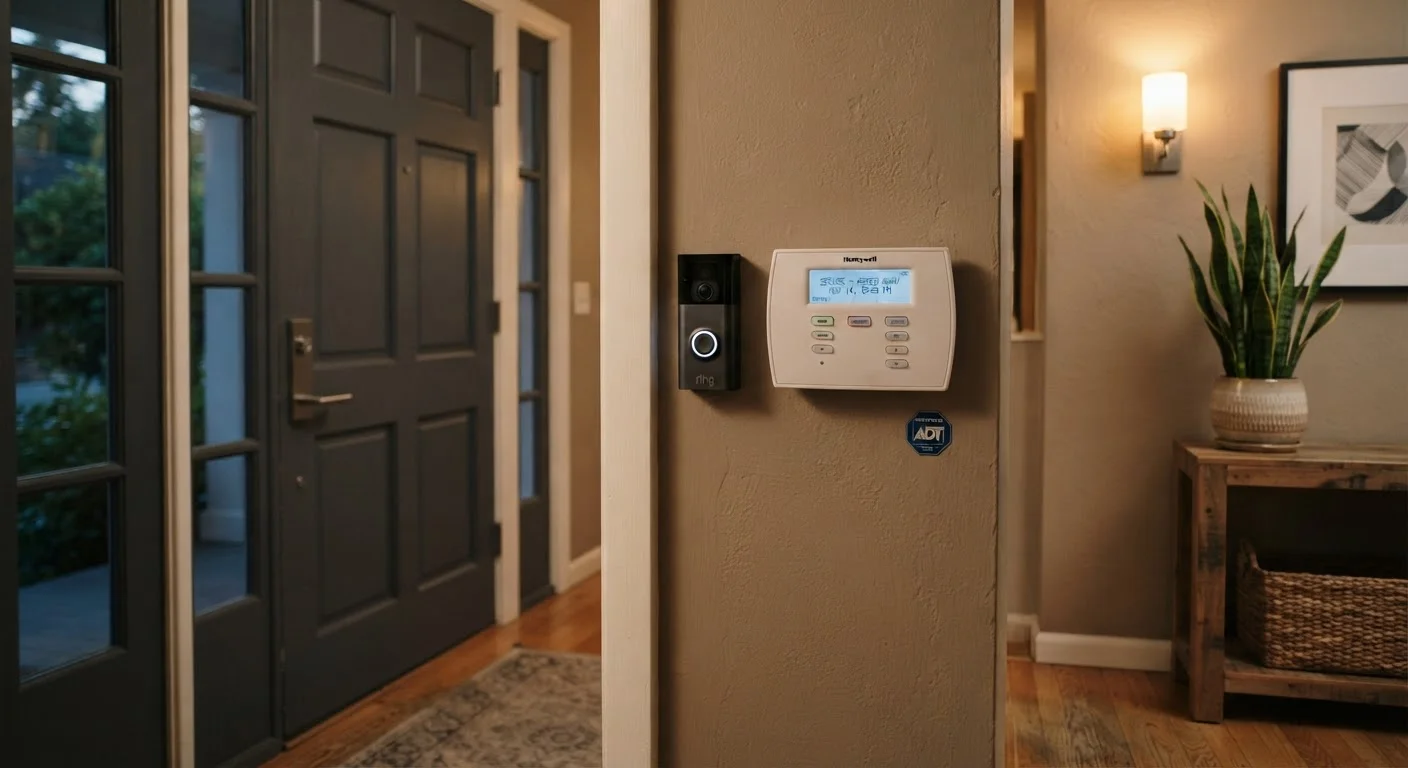
Smart home security devices excel in flexibility, remote visibility, and scalability, making them well-suited to renters, tech-comfortable households, and those wanting granular real-time awareness. Traditional alarm systems offer proven reliability, professional monitoring, and consistent performance that does not depend on a strong internet connection. For most families, the most resilient setup combines elements of both rather than treating them as mutually exclusive.
| Best for | Recommended |
|---|---|
| Renters or those who move frequently | Smart home security devices |
| Households wanting 24/7 professional emergency response | Traditional alarm systems |
| Tech-comfortable users who want remote visibility and integration | Smart home security devices |
| Homes in areas with unreliable internet or frequent power outages | Traditional alarm systems |
How Each Approach Works
Smart home security devices are internet-connected components—doorbell cameras, indoor/outdoor cameras, app-controlled locks, motion sensors, and glass-break detectors—that communicate through your home Wi-Fi network and a companion smartphone app. Alerts are pushed directly to your phone, and most systems let you view live footage, arm or disarm sensors, and respond to events from anywhere with a data connection. For a broader look at how these devices fit into a connected home, see our smart home setup guide.
Traditional alarm systems, by contrast, center on a hardwired or cellular control panel connected to door and window contacts, motion detectors, and sirens. When a sensor triggers, the panel alerts a professional monitoring center—staffed around the clock—whose operators can contact you, confirm the event, and dispatch police or fire services on your behalf. These systems typically do not require internet access; many use cellular backup so they function even if your power or broadband goes out.
Key Differences Side by Side
Understanding how the two approaches stack up across practical categories helps clarify which fits your household. The comparison below addresses the factors most homeowners weigh when making this decision.
| Smart Home Security | Traditional Alarm System | |
|---|---|---|
| Installation | DIY, typically wireless | Professional installation required |
| Monitoring | Self-monitored via app (optional professional add-on) | 24/7 professional monitoring center |
| Internet dependency | High—core features require Wi-Fi | Low—cellular backup standard |
| Upfront cost | Generally lower | Generally higher |
| Ongoing fees | Optional; required for cloud storage or pro monitoring | Monthly monitoring contract typical |
| Portability | Easy to move or reinstall | Hardwired components stay with property |
| Emergency dispatch | Requires user action or paid add-on | Automatic via monitoring center |
| Privacy considerations | Cloud data storage; review privacy policy | Limited data collection; local panel |
One dimension not captured in a table is the privacy trade-off inherent in connected cameras and microphones. Smart devices collect and transmit data by design, which warrants careful review of privacy settings and data-storage terms before purchase. What smart devices collect about your household is worth understanding before you commit to a cloud-connected system.
Installation, Maintenance, and Reliability
Smart devices are largely designed for self-installation. Adhesive mounts, magnetic contacts, and step-by-step app setup mean most households can be up and running in an afternoon without a technician. The trade-off is that reliability is tied to your internet connection and the device manufacturer's cloud service. If your router goes offline or the manufacturer's servers experience downtime, some features may be temporarily unavailable.
Traditional systems are typically installed by certified technicians who test every sensor, ensure proper wiring, and program the panel to your household's layout. Once installed, they tend to be highly reliable. Cellular monitoring backup means the system continues to report to the monitoring center even during a power failure, provided the panel's battery remains charged.
Test Your System Regularly
Whether you use a smart system, a traditional panel, or both, regular testing is essential. Smart device batteries should be checked monthly and camera fields of view verified after seasonal changes. Traditional panels should be tested with your monitoring center at least quarterly—always notify the center before testing to avoid a false emergency dispatch.
If you want to understand the self-monitoring alternative—where you manage alerts without a professional center—the trade-offs of DIY home security monitoring walks through what you gain and give up with that approach.
Costs and Contracts
Smart security devices generally carry lower upfront hardware costs, and some work with no ongoing subscription—though cloud video storage, advanced AI detection features, and professional monitoring add-ons usually require a monthly fee. Because most components are wireless and portable, renters can take them when they move.
Traditional systems typically involve a higher installation fee and a multi-year monitoring contract, though the monthly monitoring cost often includes equipment warranties and professional response guarantees. Canceling early can incur penalties, so it is important to read contract terms carefully before signing.
~60%
Burglaries occur at residential properties
According to FBI Uniform Crime Reporting data, the majority of burglary offenses consistently involve residential targets.
2–3 years
Typical traditional monitoring contract length
Most professionally monitored alarm contracts run between 24 and 36 months, according to consumer protection guidance from state attorneys general offices.
Door security is a complementary layer regardless of which system you choose. Understanding door lock options—from deadbolts to smart locks—is a practical next step for hardening entry points alongside any alarm approach.
Choosing the Right Fit for Your Household
No single system suits every home. Renters benefit from wireless smart devices they can reinstall in a new space. Homeowners with young children or elderly family members may value the certainty of 24/7 professional monitoring that requires no action on their part during a crisis. Households in areas with frequent power or internet disruptions should prioritize systems with cellular and battery backup.
A layered approach—combining smart cameras and app-controlled locks for daily awareness with a professionally monitored panel for emergency escalation—is increasingly common and can address the gaps each system type leaves on its own. Rounding out your safety plan with fire detection is equally important; smoke alarms vs. heat detectors explains how to choose the right fire detection devices for each room in your home.
This article provides general educational information about home security options and is not a guarantee of any specific product's performance, reliability, or suitability for your circumstances. Consult a licensed security professional before making installation or contract decisions.
The content on this site is for informational purposes only and is not a substitute for professional advice. Always consult a qualified professional for guidance specific to your situation.